
Please Choose Your Language
Follow
close
Choose Your Site
Global
Social Media


Views: 0 Author: Site Editor Publish Time: 2026-09-30 Origin: Site


Unplanned equipment failure in a busy commercial kitchen does not just halt food production immediately. When a burner goes down during the Friday night rush, the chaos ripples outward rapidly. Tickets back up, guests leave dissatisfied, and you actively damage your brand reputation while inflating emergency labor expenses.
Proactive maintenance profoundly changes this stressful dynamic. By shifting your management approach, you transition your kitchen away from facing reactive emergency repairs. Instead, you move toward forecasting highly predictable operational expenditures. You gain control over your kitchen environment.
Commercial operators can maximize equipment lifespan and daily efficiency by strictly aligning their daily cleaning protocols with exact engineering standards. This comprehensive guide details the essential maintenance frameworks and strategic purchasing considerations required to keep an OEM commercial gas stove running seamlessly shift after shift.
When a critical cooking station fails, the financial bleed begins immediately. You must measure the true business problem by calculating compounding losses. First, you lose potential revenue for every hour the cooking line remains incapacitated. Second, you pay premium emergency rates for commercial appliance technicians. Third, you discard wasted perishable inventory due to delayed service times. These concurrent expenses quickly erode your operational margins.
Many operators fall victim to the "run-to-failure" fallacy. They ignore minor operational anomalies because the kitchen feels too busy to stop. However, a yellow burner flame or a noticeably delayed ignition sequence serves as an early warning sign. Ignoring these minor symptoms inevitably leads to catastrophic thermal or mechanical failure. For example, a delayed ignition often allows excess gas to pool before lighting. The resulting small combustion pop eventually damages delicate internal thermocouples.
To fix this, redefine your success criteria. Your goal is not to achieve zero maintenance. No commercial appliance runs indefinitely without care. Instead, aim for predictable maintenance. You should schedule component replacements and deep cleanings well outside of your peak service hours. Predictability protects your profit margins and keeps your kitchen staff focused during service.
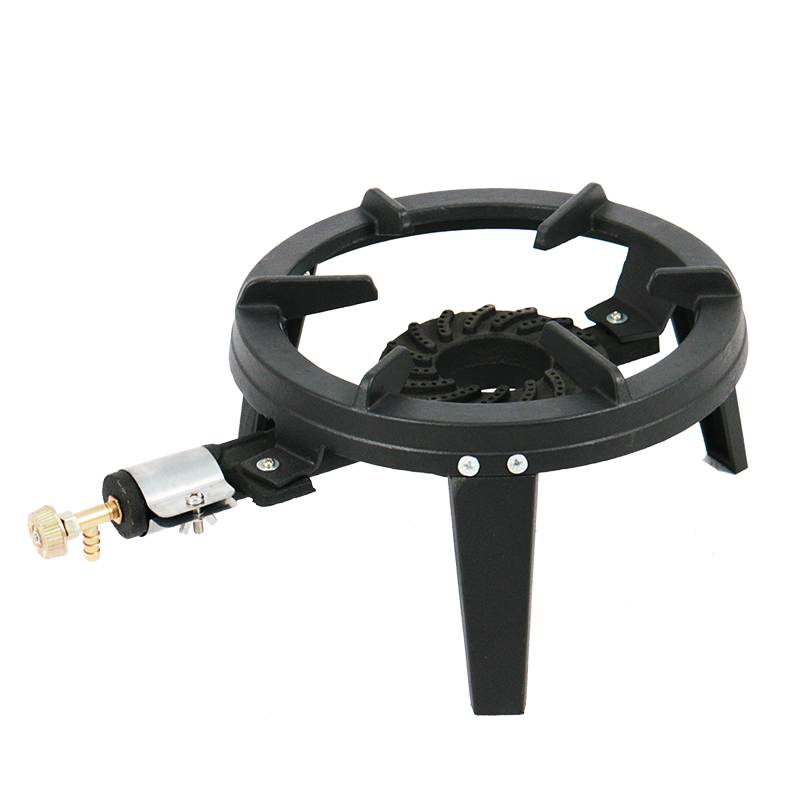
Effective maintenance relies on consistent execution. By breaking down your maintenance routines into daily, weekly, and monthly intervals, you catch minor degradation before it forces a system failure. You must build these routines into your kitchen culture.
Your team should perform specific surface and component checks at the end of every daily shift. These immediate interventions prevent the rapid hardening of commercial cooking grease. Incorporate these daily actions:
Beyond daily cleaning, you must schedule weekly and monthly deep diagnostics. These diagnostic steps identify internal wear. Follow this strict sequence during your monthly audits:
We must acknowledge the realities of daily implementation. Kitchen staff compliance often drops when service volumes peak. Overcome this challenge by utilizing structured, laminated checklists. Assign specific accountability to your line managers or sous chefs. When leaders physically sign off on maintenance steps, compliance improves drastically.
Factory limits exist for distinct engineering reasons. When you ignore these established limits, you accelerate parts wear. Pushing a burner beyond its maximum BTU output or feeding incorrect gas pressure into the manifold stresses internal valves. Over time, these stressed metal components warp or crack under excessive thermal load.
Regular tuning to exact OEM commercial gas stove specifications directly guarantees optimal fuel combustion. Precise calibration yields a sharp, steady blue flame. This efficiency prevents you from wasting expensive utility gas. Furthermore, complete combustion drastically reduces the risk of dangerous carbon monoxide accumulation in your kitchen.
Maintaining strict compliance also preserves your commercial warranties. Manufacturers routinely reject warranty claims if they discover neglected internal components. You must keep properly documented service logs. These physical logs definitively prove your adherence to the manufacturer’s recommended maintenance schedule.
Routine Alignment Matrix
| Component Group | Factory Specification Limit | Required Action |
|---|---|---|
| Gas Pressure Regulator | Maintains strict water column (WC) pressure specific to Natural Gas or Liquid Propane. | Verify dynamic pressure using a manometer bi-annually. |
| Pilot Assembly | Requires precise oxygen-to-gas ratio for a stable standing pilot. | Clean air shutters and adjust mixture to eliminate yellow tipping. |
| Thermocouple Sensor | Must register specified millivolt range when heated by pilot flame. | Measure voltage monthly; replace immediately if output drops below minimums. |
When you evaluate equipment, you must map physical features directly to operational outcomes. Smart engineering inherently reduces the time your staff spends cleaning. Look closely at how manufacturers assemble their units.
Consider the feature of tool-less component removal. When staff can lift off grates, burner rings, and drip trays without screwdrivers, you experience a highly beneficial outcome. You achieve faster daily cleaning times. You also eliminate the risk of rushed employees cross-threading screws or damaging delicate brass parts during late-night disassembly.
Sealed burner designs offer another critical feature. These designs completely prevent liquid grease ingress into internal gas manifolds. By physically blocking spills from reaching the complex valve architecture beneath the cooking surface, you stop internal blockages before they happen.
You must also weigh long-term scalability. Investing strategically in a custom OEM commercial gas stove tailored to your specific menu requirements saves enormous wear over time. If your menu revolves around high-heat wok cooking, standard residential-style burners will warp under the intense thermal stress. Conversely, low-simmer sauce stations require precise, gentle heat control. Matching your burner architecture directly to your culinary technique reduces undue stress on inappropriate components.
White-labeling commercial equipment offers excellent branding opportunities, but it introduces distinct sourcing risks. Buyers often face severe difficulties sourcing replacement parts for these units. This happens because the original offshore manufacturer might use highly proprietary, non-standardized internal fittings. When a simple control knob or safety valve breaks, operators cannot easily find replacements at local supply houses.
Businesses engaged in private label sales OEM commercial gas stove deployments must demand component standardization. You must negotiate for universally accessible valves, universal thermocouples, and standard commercial ignition systems. Using standardized components lets local technicians source parts on the same day. This specific strategy prevents prolonged equipment outages.
Technical documentation poses another frequent bottleneck. If you purchase white-labeled equipment, ensure the factory provides comprehensive support materials. Your supplier must provide highly detailed, accurately translated maintenance manuals suitable for direct end-user distribution. An exploded parts diagram ensures your technicians know exactly how to reassemble the unit safely.
You must look far beyond the initial purchase price when shortlisting manufacturing partners. A suspiciously cheap stove quickly becomes your most expensive asset if it breaks repeatedly. Use a stringent logic framework to evaluate potential partners based on their post-purchase support infrastructure.
Parts availability strictly dictates your future uptime. A truly reliable OEM commercial gas stove supplier must guarantee rapid shipping of critical replacement parts. They should offer explicit Service Level Agreements (SLAs) regarding part fulfillment. Look for partners who maintain robust domestic or regional distribution networks. You cannot afford to wait four weeks for a replacement manifold to ship from overseas.
Trustworthiness also stems from transparent safety certifications. Verify that the supplier holds legitimate CSA, NSF, and ANSI certifications. These badges prove the equipment passed rigorous, independent safety tests. Furthermore, an authoritative supplier will speak openly about their component failure rates. They will happily share their historical warranty claim statistics because they stand confidently behind their engineering quality.
Maximizing equipment uptime remains a strictly two-part equation. First, your kitchen staff must adhere rigorously to daily maintenance routines and cleaning protocols. Second, you must practice strategic upfront purchasing, selecting equipment designed specifically for accessibility and standard part replacement.
We encourage buyers and facility managers to take immediate action. Audit your current kitchen maintenance checklists today to ensure they match factory limits. Review your existing equipment's engineering specifications to identify any mismatch with your current menu. Finally, contact a vetted OEM manufacturing partner for a professional consultation on high-uptime commercial models tailored to your unique operational footprint.
A: We strongly recommend scheduling bi-annual or annual professional inspections. While your kitchen staff handles daily cleaning, a certified technician must check dynamic gas pressure, professionally calibrate internal thermostats, and inspect internal safety valves. This professional oversight directly supplements daily staff maintenance and identifies deep mechanical wear before failure.
A: Burner failure typically stems from severe carbon buildup clogging the main burner ports. Other frequent culprits include faulty or degraded thermocouples and gummed-up gas valves caused by a chronic lack of deep cleaning. Routine degreasing prevents the vast majority of these issues.
A: While models with standing pilots technically allow manual lighting, you must exercise extreme caution. Commercial kitchens rely on heavy-duty electronic ventilation hoods. Operating gas burners without an active ventilation system causes highly dangerous carbon monoxide buildup. Never operate commercial gas equipment without active, powered hood ventilation.
A: Yes. Installing aftermarket or non-authorized parts almost universally voids original manufacturer warranties. Beyond warranty invalidation, aftermarket components can drastically alter your stove's baseline safety profile and BTU efficiency, leading to unpredictable combustion and potential regulatory compliance violations.

