
Please Choose Your Language
Follow
close
Choose Your Site
Global
Social Media


Views: 0 Author: Site Editor Publish Time: 2026-11-13 Origin: Site


As we navigate the demands of 2026, professional kitchen requirements are shifting rapidly. High-volume output requires serious, uncompromising hardware. Whether you are outfitting a bustling urban restaurant or designing a high-end culinary workspace, a premium gas stove remains the undisputed engine of the kitchen. The enduring appeal of gas cooking comes down to empirical facts on the line. Chefs demand precise tactile control. They need instant heat adjustments and the immediate visual feedback of an open flame.
Combine these functional benefits with the unmatched durability of stainless steel, and the resulting appliance becomes a long-term operational asset. For environments demanding relentless reliability, the ultimate powerhouse is the eight-burner configuration. This guide breaks down the exact specifications, materials, and structural features you must evaluate before making a high-ticket equipment purchase this year. Understanding the technical nuances of a professional range allows you to make a data-driven decision that directly elevates your daily service speed and profitability.
Durability is Non-Negotiable: Selecting heavy-duty materials like 304-grade stainless steel ensures operational longevity and superior corrosion resistance in high-moisture environments.
Burner Configuration Matters: An eight-burner setup offers maximum multitasking efficiency. This expansive footprint is the ideal choice for commercial kitchens, catering businesses, and large-scale entertaining.
BTU Output Dictates Performance: Versatile British Thermal Unit output ranges are critical. You need high power for aggressive searing and dedicated low-BTU valves for delicate, controlled simmering.
Safety First: Modern appliance models must feature advanced safety mechanisms. Flame failure safety devices and heavy-duty cast iron grates provide essential structural stability and hazard prevention.
Oven Versatility: A premium unit seamlessly combines a high-powered stovetop with spacious convection oven cavities, drastically reducing overall baking and roasting times.
Despite the rapid marketing push behind induction technology, veteran line cooks and executive chefs consistently prefer gas. The primary reason is absolute tactile control. Gas burners allow cooks to instantly gauge and manipulate heat levels. This is absolutely critical when executing complex recipes that require rapid temperature shifts. Imagine deglazing a heavy pan. You need immediate heat reduction the exact second the liquid hits the hot metal. Gas delivers that instant drop. Furthermore, gas stoves offer universal compatibility with all cookware profiles. Round-bottom woks, seasoned cast iron skillets, and unevenly shaped specialty pans perform flawlessly over an open flame, whereas they struggle on flat glass induction surfaces.
Hygiene and structural durability are paramount in any serious kitchen. Stainless steel is inherently non-porous. It actively resists bacteria buildup, acidic food stains, and lingering odors. The metal easily withstands harsh chemical degreasers and punishing high-heat environments without losing its structural integrity. Beyond these functional benefits, stainless steel offers a sleek, industrial aesthetic. It maintains a professional, polished appearance even after years of rigorous daily abuse, ensuring your workspace looks as sharp as the dishes you plate.
The commercial appliance sector has introduced several notable engineering advancements recently, driven heavily by rising energy costs and sustainability mandates. Current 2026 trends show top-tier manufacturers focusing on optimized, precision-engineered burner heads. These new designs direct thermal energy straight into the base of the pan, significantly reducing ambient heat loss. This efficiency not only lowers monthly utility bills but also keeps the kitchen environment noticeably cooler for the staff. Upgraded electronic spark ignition systems have also become the new standard, completely eliminating the energy waste associated with traditional standing pilot lights.
In a high-paced restaurant environment, speed is profit. Picture a Friday night dinner rush. Tickets are printing relentlessly, and the expediter is demanding food. An 8 Burner Stainless Steel Stove maximizes your active workspace. It allows multiple distinct dishes to be prepared simultaneously without crowding the cooking surface. Chefs can manage rolling stockpots, active sauté pans, and delicate reduction sauces concurrently. This expansive layout drastically reduces ticket times and eliminates frustrating service bottlenecks.
Catering operations face unique logistical hurdles. They often require the preparation of hundreds of meals within strict, unforgiving timeframes. An eight-burner layout provides the sustained, heavy-duty performance necessary for massive batch cooking. You can dedicate specific burners to distinct temperature zones. Keep high heat on the left for searing proteins while maintaining a gentle simmer on the right for holding soups. This establishes a highly efficient, factory-like workflow. When cooking for a crowd of three hundred, equipment failure is simply not an option.
There is a rapidly growing architectural movement of home chefs installing true commercial-grade appliances in luxury residences. The prosumer market increasingly demands massive stainless gas ranges for well-ventilated indoor culinary spaces or expansive outdoor kitchens. These units cater directly to homeowners who frequently host large gatherings or tackle multi-course holiday meals. They offer genuine restaurant-level performance in a residential setting.
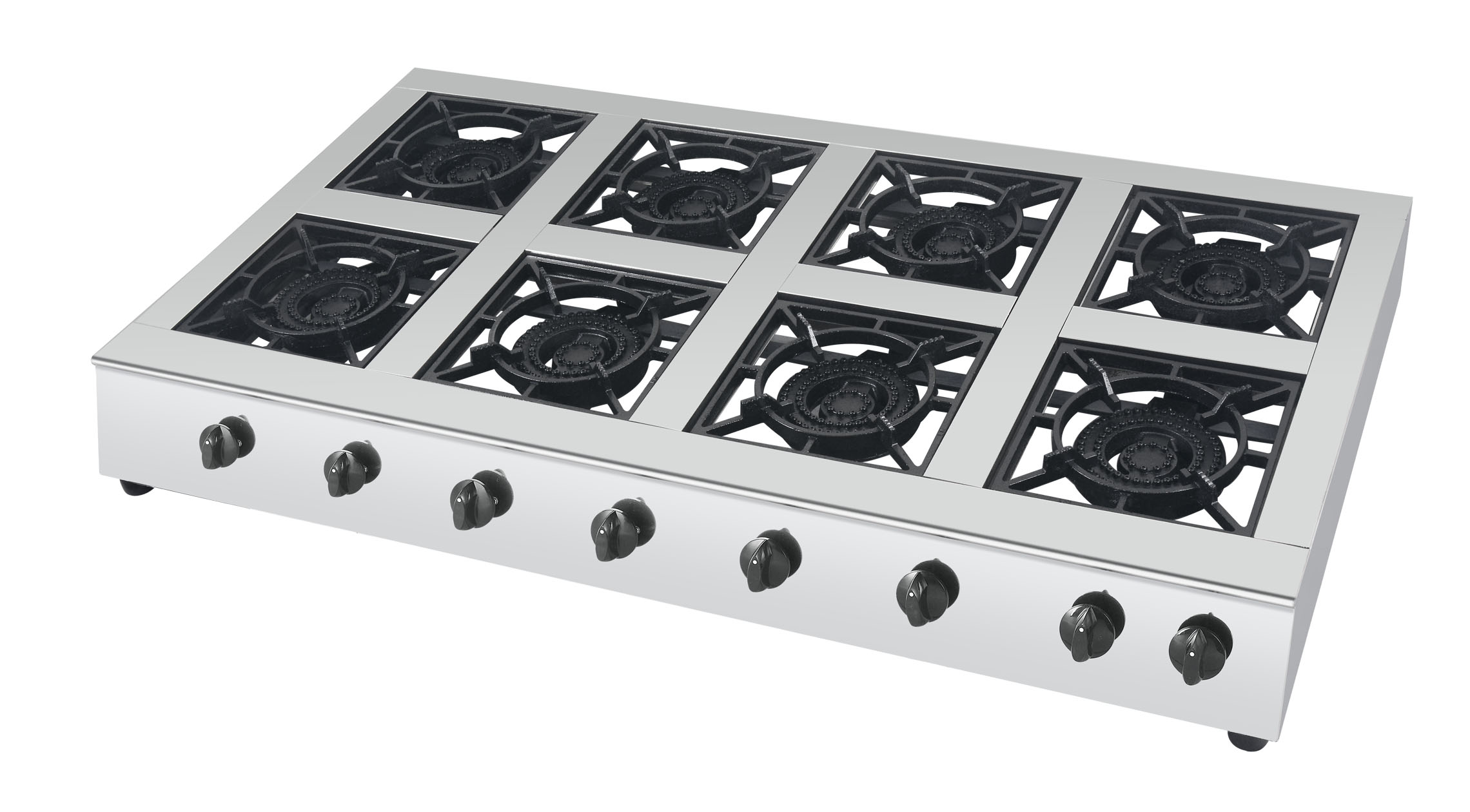
BTU output is the standard metric for measuring heat generation. For optimal cooking speed and versatility, a quality commercial stove must offer a strategic mix of burner outputs. Uniform power across the board is a design flaw. Look for a unit like the WH8 Manufacturer Gas Stove, which typically features primary high-output burners delivering upwards of 30,000 BTUs. These are your workhorses for rapid water boiling and intense meat searing. Equally important are the dedicated simmer burners. Operating at lower outputs, these zones provide the gentle, consistent heat required for melting chocolate or holding hollandaise sauce without scorching.
The structural integrity of your cooking surface dictates everyday safety and efficiency. Continuous heavy-duty cast-iron grates are mandatory. They create a flat, uninterrupted surface that allows kitchen staff to slide a forty-pound stockpot smoothly from one burner to another without lifting. This drastically reduces physical strain and minimizes the risk of dangerous spills. When evaluating burner materials, note that brass burner rings offer superior longevity. They resist heat deformation far better than standard aluminum rings, making them a crucial investment for high-traffic kitchens.
Buyers must choose between traditional pilot lights and modern electronic spark ignition. Pilot lights remain common in pure commercial settings due to their mechanical simplicity and unwavering reliability during power outages. Conversely, electronic spark ignition systems are dominating the 2026 market. They are significantly more energy-efficient because they do not require a constant flow of gas to maintain a flame. In practical terms, this keeps the ambient temperature of the kitchen much lower during off-peak prep hours.
Not all stainless steel is manufactured equally. The underlying metallurgy significantly impacts the lifespan of your appliance. To simplify the selection process, here is a direct comparison of the two most common grades used in commercial equipment.
Steel Grade | Nickel Content | Corrosion Resistance | Best Kitchen Application |
|---|---|---|---|
Grade 304 | High 8 to 10 percent | Excellent | High-humidity areas, handling acidic foods like tomato sauces. |
Grade 430 | Low to None | Moderate | Budget-conscious builds, dry prep areas, side panels. |
Grade 304 stands as the premier choice for humid environments. For a true long-term investment that resists rust and chemical degradation, 304 grade is the undisputed gold standard.
In metal manufacturing, a lower gauge number indicates thicker, more robust steel. For a heavy-duty appliance expected to endure daily abuse, you should specifically demand 16-gauge or 18-gauge stainless steel construction. Thicker steel prevents the unit exterior from denting under the impact of heavy cookware. More importantly, a rigid chassis resists structural warping under the extreme, sustained heat generated when all eight active burners are firing simultaneously.
An eight-burner stovetop typically requires a massive footprint spanning 48 to 60 inches in width. This expansive chassis naturally accommodates two distinct oven cavities side-by-side. A dual-oven configuration is highly advantageous for multitasking during a busy service. It usually features a primary large oven capable of holding full-size commercial sheet pans, alongside a secondary, narrower oven. This setup allows chefs to bake distinct items at vastly different temperatures simultaneously. Roast a prime rib at high heat on the left while gently baking delicate pastries on the right.
Consistent heat distribution within a massive oven cavity can be a challenge. Therefore, evaluating the convection capabilities of an 8 Burner Stainless Steel Commercial Stove is critical. Convection ovens utilize internal fans to circulate hot air continuously around the food. This active airflow mechanism ensures perfectly even heat distribution and eliminates cold spots. Specifically, it can reduce overall baking times by up to 25 percent. While standard baking is acceptable for simple tasks, convection technology is vastly superior for achieving consistent browning across multiple racks.
The interior build quality dictates both thermal efficiency and ease of maintenance. Look for models featuring porcelain-enameled interiors. Grease and baked-on carbon slide off this smooth, glass-like surface much easier than raw steel, saving your prep team hours of scrubbing. Furthermore, thick fiberglass insulation surrounding the oven cavity is mandatory. Proper insulation keeps the external stainless steel panels safe to the touch, maintains highly consistent internal baking temperatures, and prevents excess heat from bleeding into the kitchen.
Safety cannot be compromised when dealing with high-output gas appliances. The absolute most critical feature to verify on any new model is the presence of Flame Failure Safety Devices. These commonly utilize highly sensitive thermocouples. If a burner flame is accidentally extinguished by a sudden draft or a boiling pot spilling over, the thermocouple instantly detects the rapid temperature drop. Within seconds, it automatically shuts off the gas supply to that specific burner, preventing dangerous, invisible gas accumulation.
Routine maintenance directly extends the operational life of the equipment. Daily cleaning should involve emptying and washing the removable drip trays located beneath the burners to prevent sudden grease fires. Stainless steel exterior surfaces must be wiped down using non-abrasive cleaners. Always rub in the direction of the metal grain to prevent micro-scratches. Cast iron grates should be soaked periodically in warm, soapy water and thoroughly dried to prevent rust formation. Make no mistake, harsh chemical bleaches will permanently mar the anti-corrosive finish of the steel.
Operating a unit of this magnitude produces massive amounts of ambient heat, airborne grease, moisture, and smoke. Running this appliance safely requires a commercial-grade range hood with a high Cubic Feet per Minute extraction rating. In many jurisdictions, local building codes also mandate the installation of a make-up air system. This replaces the massive volume of air being extracted, ensuring proper atmospheric pressure and safe air quality within the kitchen.
A common pitfall for prosumer buyers is accidental warranty invalidation. Purchasing a commercial-grade stove and installing it in a residential home often voids the manufacturer warranty immediately. Commercial units typically lack the specific zero-clearance insulation required for safe proximity to standard wooden home cabinetry. Buyers must clearly communicate their intended installation environment and verify warranty terms with the supplier prior to finalizing the purchase.
Sourcing directly from reputable manufacturers provides distinct operational advantages over buying off-the-shelf models. Factory-direct purchasing often allows for custom stovetop configurations tailored to your specific menu. For example, a buyer might choose to swap four open burners for a built-in stainless steel griddle plate or a cast-iron charbroiler. Exploring tailored options like a commercial 8 burner stainless steel gas stove provides the modular flexibility needed to create a truly bespoke cooking station.
Compliance with health and safety standards is mandatory. Ensure the appliance carries recognized certifications such as CE, CSA, or NSF. These badges guarantee that the equipment has been rigorously tested by third-party agencies and meets strict 2026 local safety, fire, and sanitation codes.
Investing in a high-quality eight-burner gas range is a transformative decision that drastically improves daily culinary efficiency. By prioritizing durable materials like 16-gauge 304 stainless steel, selecting the right mix of BTU outputs, and ensuring modern safety mechanisms are in place, you secure an appliance built to handle the rigors of heavy volume cooking.
Always measure your kitchen space carefully and heavily assess your ventilation capabilities before committing to a purchase. An appliance of this magnitude requires proper airflow and infrastructure to operate safely and effectively.
We highly encourage you to consult with reputable commercial stove manufacturers to find the perfect fit for your specific operational needs. By exploring top-rated models like the WH8 series and discussing factory-direct customization options, you can tailor your equipment to match your exact culinary workflow. Visit Komisun today to request a customized equipment quote and take the definitive first step toward upgrading your 2026 kitchen infrastructure.
While possible, it requires significant structural modifications. You will need a commercial-grade ventilation hood with high extraction power, proper fireproofing like zero-clearance backing or stainless steel heat shields to protect wooden cabinets, and upgraded gas lines to handle the increased BTU demand. You must check your local residential building codes and consult your home insurance policy, as installing commercial equipment can sometimes affect coverage limits.
With strict adherence to proper daily maintenance and the occasional replacement of consumable parts like thermocouples, electronic igniters, or oven door seals, a high-quality stainless steel gas range can easily last 15 to 20 years or more, even in a punishing, high-volume kitchen environment.
Always wipe in the direction of the steel grain using a clean microfiber cloth. Use a dedicated commercial stainless steel cleaner or simply warm, soapy water. Strictly avoid using steel wool, abrasive scouring pads, or harsh chemical bleach. These will permanently mar the surface, create micro-scratches, and degrade the natural anti-corrosive properties of the steel.
Both fuels perform excellently and deliver high, responsive heat. Natural gas is generally more convenient and cost-effective if your building is already plumbed for it, as you will never run out of fuel mid-service. Liquid Propane is slightly more energy-dense and serves as the ideal solution for mobile catering operations or rural locations without access to municipal gas lines. Most manufacturers offer simple conversion kits to switch between the two fuels.
Yes. Many direct manufacturers allow you to customize the stovetop layout before shipping. A highly popular configuration in commercial settings is retaining six open gas burners while replacing the remaining footprint with a 12-inch or 24-inch flat stainless steel griddle plate. This provides exceptional versatility for executing breakfast services, searing burgers, or toasting buns without needing a separate appliance.
Due to the massive total BTU output of an eight-burner configuration combined with dual ovens, a standard residential half-inch gas line is rarely sufficient. Most commercial units require at least a three-quarter-inch or even a full one-inch dedicated gas line to ensure proper pressure. Starving the unit of gas will result in weak flames and poor oven performance. Always consult a licensed gas plumber to verify your infrastructure.
Absolutely. Operating eight high-output burners generates an immense amount of heat, smoke, and grease-laden vapor. A standard residential hood cannot handle this volume. You must install a commercial-grade Type 1 ventilation hood system equipped with baffle filters and a high-capacity exhaust fan. Furthermore, local fire codes typically require an integrated fire suppression system for commercial cooking equipment of this size.

