
Please Choose Your Language
Follow
close
Choose Your Site
Global
Social Media


Views: 0 Author: Site Editor Publish Time: 2026-08-07 Origin: Site


Choosing the wrong equipment size guarantees kitchen chaos. Undersizing creates immediate bottlenecks during peak dinner services. You will struggle to push tickets out on time. Conversely, oversizing wastes valuable linear line space. It also inflates your utility bills unnecessarily. You need a precise balance to maintain a highly functional kitchen environment.
A true high-volume unit differs drastically from a standard range. You must evaluate recovery times carefully. You also need to inspect continuous grate designs and overall structural integrity. Heavy-duty cooking demands equipment capable of sustaining extreme temperatures for hours. Standard units simply cannot handle this intense thermal stress.
To avoid these operational pitfalls, we use a dual-lens sizing framework. You need to balance the physical footprint against the necessary thermal output. We call this spatial sizing versus BTU sizing. High-volume commercial kitchens require exact matches in both categories. You will learn exactly how to align these critical metrics to your specific menu demands below.
Sizing goes far beyond measuring the physical space in your kitchen. You must differentiate between physical dimensions and performance sizing. Physical dimensions include width, depth, and wall clearances. Performance sizing dictates the BTU output and thermal recovery rates. Both dimensions must align to create a functional cooking station. Ignoring performance sizing leads to underpowered equipment. Ignoring physical dimensions leads to cramped, dangerous work areas.
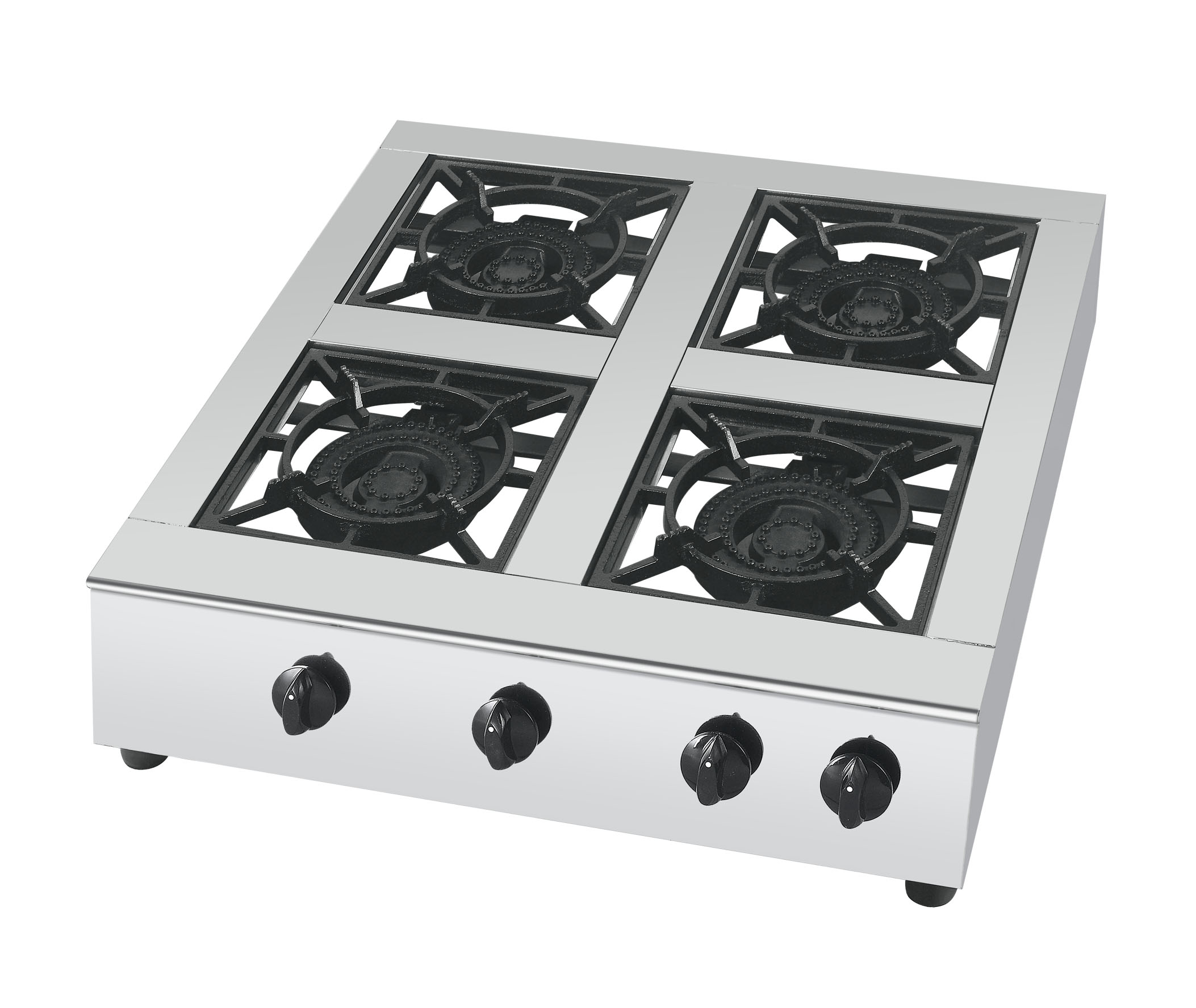
High-volume kitchens must often step up from basic models. You cannot rely on entry-level restaurant series configurations. They lack the durability required for continuous operation. You need heavy-duty configurations instead. These units feature thicker gauge steel frames. They utilize robust manifold mounting for structural rigidity. A properly specified 4 burner commercial gas stove acts as the anchor of your hot line. It easily handles intense daily use without degrading.
The ultimate success criteria for proper sizing is clear. A properly sized unit allows four 12-inch pans to operate simultaneously. They must hit max heat without suffering from structural warping. The burners must deliver consistent fuel without flame starvation. Heavy-duty units provide a continuous grate surface. Chefs can slide heavy pans across burners effortlessly. This reduces physical strain and speeds up service times. When sizing your unit, always prioritize this functional capacity over simple measurements.
Thermal output serves as your primary performance metric. Boiling large pots and searing proteins require immense energy. High-volume environments demand at least 28,000 to 35,000 BTUs per burner. Anything less will severely slow down your line. Water takes too long to boil on weak burners. Pans lose their heat the moment you add cold ingredients. High BTUs ensure instant temperature recovery. This keeps your ticket times exceptionally low.
You must calculate the total manifold load accurately. This helps you understand the true energy draw. For instance, four burners operating at 30,000 BTUs each create a 120,000 BTU load. This cumulative load heavily impacts your kitchen infrastructure. When sizing a high-volume cooking 4 burner commercial gas stove, ensure it maintains continuous output. You cannot afford pressure drops during Friday night service. Every burner must perform optimally at the exact same time.
Higher BTUs only translate to faster cooking under the right conditions. You must provide adequate makeup air. The kitchen also needs proper mechanical ventilation. Starving the room of oxygen reduces burner efficiency. You will see yellow, lazy flames instead of crisp blue cones. Always check your HVAC assumptions before upgrading to high-BTU equipment.
| Stove Classification | Average BTU Per Burner | Total 4-Burner Load | Recommended Application |
|---|---|---|---|
| Light-Duty / Cafe | 15,000 - 20,000 | 60,000 - 80,000 | Low-volume prep, breakfast stations |
| Standard Restaurant Series | 25,000 - 28,000 | 100,000 - 112,000 | Medium diners, standard dinner service |
| Heavy-Duty High-Volume | 30,000 - 35,000+ | 120,000 - 140,000+ | Constant extreme volume, rapid boiling |
Grate spacing determines how efficiently your chefs work on the line. You must evaluate standard width configurations very carefully. The footprint dictates what pan sizes you can realistically use.
Depth matters just as much as overall width. Standard depths usually range from 30 to 36 inches. You must match the flush line perfectly with adjacent fryers. Uneven equipment lines create dangerous grease traps. Reviewing specific 4 burner commercial gas stove specifications ensures seamless structural integration. You must also account for exact wall clearance rules. A common requirement demands a 6-inch rear clearance from combustible walls. Some units require heat shields to reduce this distance.
Sometimes standard units simply do not fit your exact workflow. You might need to explore specific custom 4 burner commercial gas stove builds. Manufacturers offer step-up rear burners for better pan visibility. You can also find French top hybrids for gradient heat zones. Base options vary significantly as well. You can select refrigerated base drawers instead of standard ovens. This keeps raw proteins directly beneath the cooking surface. Customizing your base accelerates plating times significantly.
Many operators focus entirely on the physical appliance itself. They frequently overlook the supporting kitchen infrastructure. Gas line sizing causes constant implementation failures across the industry. Connecting a high-volume unit to an undersized gas line guarantees trouble. Using a 1/2-inch pipe restricts crucial gas flow. Heavy-duty ranges typically require a 3/4-inch or 1-inch pipe. You will experience immediate flame starvation if the pipe is too narrow. When chefs turn all four burners on, the heat output plummets. This completely defeats the purpose of buying high-BTU equipment.
Exhaust hood sizing represents another critical hidden factor. Total stove BTUs directly correlate with your required hood exhaust rates. High-BTU gas cooking heavily relies on heavy-duty Type 1 hoods. Every extra BTU generated requires a corresponding increase in CFM. CFM stands for cubic feet per minute. If your exhaust system pulls too little air, smoke accumulates instantly. Heat will also build up, making the kitchen dangerously uncomfortable. Always verify your current hood CFM capacity before upgrading your ranges.
Sizing also involves strict adherence to local safety fire codes. The NFPA 96 standard dictates mandatory physical clearances. You must maintain safe distances around the heating unit. You cannot push a heavy-duty stove flush against combustible drywall. You must account for these mandatory clearances before finalizing your floor plan. Failing to meet code results in failed inspections. It can also void your commercial insurance policy entirely.
Your equipment is only as reliable as the company selling it. Moving to the purchasing decision requires careful vetting. You must separate a reliable B2B equipment partner from a generic retailer. Choosing the right 4 burner commercial gas stove supplier ensures operational stability. Look for specific evaluation dimensions during your shortlisting process. Strong suppliers act as consultants, not just order takers.
A premier supplier helps you navigate complex infrastructure matching. They ask about your gas line diameter before recommending a model. They inquire about your menu to suggest proper BTUs. Working with true professionals mitigates expensive installation mistakes down the road.
Sizing commercial cooking equipment requires a highly comprehensive approach. It remains a precise tri-fold process spanning multiple disciplines. First, you must balance BTUs for maximum thermal output. Second, you must select the physical width for spatial pan efficiency. Third, you must align your gas and hood infrastructure for absolute code compliance. Taking shortcuts in any of these areas creates massive operational bottlenecks.
You can take actionable steps today to prevent purchasing errors. Measure your exact physical line gap carefully. Verify your current gas pipe diameter to ensure adequate fuel supply. Check your exhaust hood data plate for CFM ratings. Finally, consult directly with a certified commercial supplier. Request a detailed specification sheet to compare models against your kitchen's true capacity.
A: Standard commercial units typically come in 24-inch and 36-inch width variations. A 24-inch model saves space but limits pan capacity. A 36-inch unit allows four large pots to sit flush. Standard commercial depths usually range between 30 and 36 inches to align evenly with fryers and griddles.
A: High-volume commercial cooking requires a baseline of 25,000 to 35,000 BTUs per burner. This high thermal output ensures rapid water boiling and immediate pan temperature recovery. Lower BTU models will struggle significantly to maintain heat during intense back-to-back dinner rushes.
A: Yes, you can run them on propane. Most manufacturers provide specific Liquid Propane (LP) conversion kits. Keep in mind that BTU output slightly differs between Natural Gas and Liquid Propane. You should always confirm the exact LP performance ratings with your equipment supplier before installation.
A: Commercial stoves feature thicker insulation and heavy-duty continuous cast-iron grates. They often utilize standing pilots instead of electronic ignition systems for better reliability. Additionally, commercial units must adhere to strict NFPA fire code compliance and require specialized, high-capacity ventilation hoods.

