
Please Choose Your Language
Follow
close
Choose Your Site
Global
Social Media


Views: 0 Author: Site Editor Publish Time: 2026-09-23 Origin: Site


In a high-volume kitchen, equipment failure or compliance shutdowns directly equal lost revenue. When the dinner rush hits, your culinary team needs reliable heat. They simply cannot afford unexpected downtime or burner malfunctions. Installing a new commercial cooking station isn't just about moving a metal box into a kitchen. It requires precise alignment between menu demands, gas utility limits, and stringent fire safety codes. Missing a single infrastructure detail can halt your entire operation overnight.
This guide provides a strategic roadmap for evaluating commercial gas cooktop specifications, navigating complex installation codes, and choosing the right vendor. We will help you ensure seamless deployment and maximum uptime. You will learn how to audit your facility capacity safely. We will explore optimal burner configurations for heavy-duty workflows. Finally, you will discover how to mitigate risks during the final handoff process to protect your staff and facility.
The most common installation delay is buying a cooktop that exceeds the building's current gas or ventilation capacity. Many operators purchase equipment based purely on menu ambition. They overlook the physical limitations of their existing kitchen infrastructure. You must address utility limits before reviewing equipment catalogs.
Assess the total BTU/hr required by the new unit immediately. Then, verify if your existing manifold can handle the combined load of all kitchen equipment. Adding a high-output station might starve other appliances of gas. This starvation causes weak flames and dangerously slow recovery times during peak service. You must calculate the aggregate demand accurately.
Determine the necessary gas line diameter early in your planning phase. Most heavy-duty setups require 3/4-inch or 1-inch lines to prevent pressure drops. Check manufacturer guidelines to confirm the exact feed size needed. Supply lines must match the volume requirements of your specific gas type. Natural gas requires different pressure parameters than liquid propane. Knowing these numbers prevents catastrophic performance failures.
Common Gas Pipe Capacity Guidelines
| Pipe Size (Inches) | Max Capacity (Natural Gas BTU/hr) | Max Capacity (Liquid Propane BTU/hr) |
|---|---|---|
| 1/2" | ~100,000 | ~150,000 |
| 3/4" | ~250,000 | ~350,000 |
| 1" | ~500,000 | ~700,000 |
| 1 1/4" | ~900,000 | ~1,200,000 |
Verify your Type 1 commercial hood extends adequately over the planned footprint. Fire inspectors check this overlap rigorously before issuing permits. Standard codes typically require a six-inch overhang beyond the equipment edge. Upgrading to a wider unit often mandates expensive hood expansions. Do not assume your current hood fits a newly configured station.
Ensure the existing fire suppression system nozzles align directly with the new burner configuration. Systems like Ansul target specific hazard zones. If you change your equipment layout, certified technicians must reposition those overhead nozzles. Failure to adjust suppression drops violates municipal fire codes immediately. This oversight often results in immediate health department shutdowns.
busy restaurants commercial gas cooktop requirements differ vastly from standard setups. The equipment must optimize chef movement and handle continuous heavy-duty use. Speed and durability dictate survival during a Friday night rush.
Evaluate off-the-shelf configurations against fully modular setups. A standard six-burner unit works perfectly for diners or general-purpose menus. However, specialized culinary programs benefit immensely from modular additions. You might mix open burners for sautéing and integrated charbroilers for grilling. A custom commercial gas cooktop matches exact culinary techniques, reducing unnecessary kitchen movement.
Assess step-up burners for heavy stockpot access. These designs elevate the rear burners above the front row. They allow chefs to reach massive boiling pots without reaching over dangerous, active sauté pans. French tops offer another excellent alternative. They provide a large, flat cast-iron surface featuring graduated heat zones. Chefs can slide pans from a rolling boil in the center to a gentle simmer on the edges.
Look specifically for cast-iron grates and fully welded stainless steel chassis. Riveted frames often loosen over time under the immense weight of commercial cookware. Fully welded Type 304 stainless steel resists corrosion from acidic food spills. This material withstands rigorous daily scrubbing.
Evaluate pilot light systems based on reliability and your maintenance capabilities. Standing pilot lights remain the industry standard for sheer reliability. They waste a small amount of gas but rarely fail mechanically. Electronic ignition systems save energy by sparking only when needed. However, they introduce sensitive electrical components into a harsh, greasy environment. Choose the system your maintenance crew can handle easily.
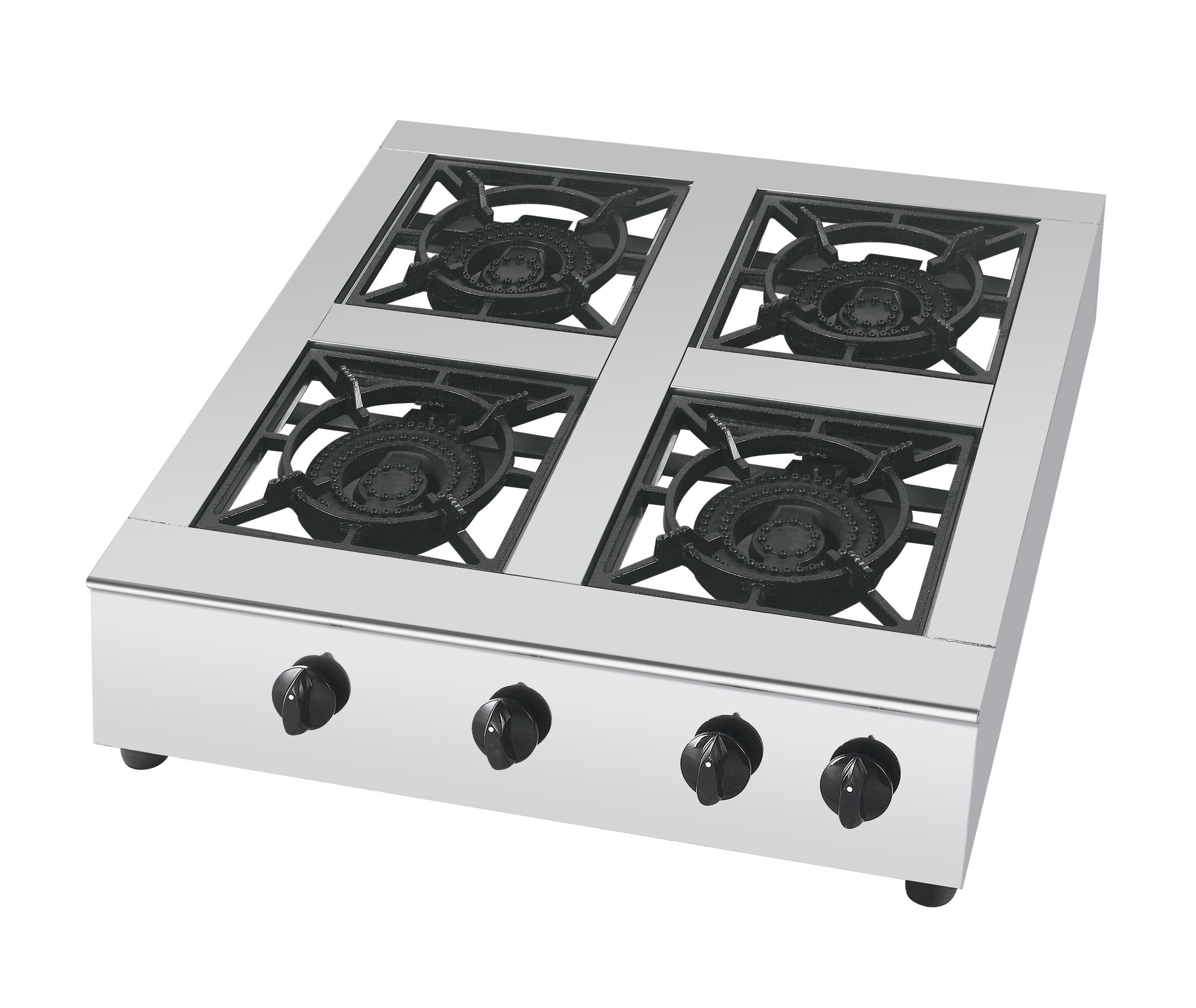
Improper installation voids warranties, risks catastrophic fire hazards, and fails health inspections. You must prioritize safety and structural integrity above installation speed.
DIY or uncertified contractor installations are completely unacceptable in a commercial kitchen. High-volume operations carry immense liability. Unlicensed work immediately invalidates your property insurance policies. Municipal permit requirements strictly mandate licensed gas fitters for all connections. They ensure gas lines withstand heavy daily vibrations.
Certified professionals guarantee correct manifold pressure readings. They secure fittings using approved sealants designed for high-heat environments. If a leak occurs due to amateur installation, operators face severe legal consequences. Always demand proof of certification and insurance from your installation team before they touch a wrench.
Adhering to manufacturer guidelines for spacing is crucial. You must maintain proper clearance to combustibles between the unit and adjacent walls. You also must separate open flames from deep fryers. Install approved metal splash guards if the required distance falls short. Fire marshals measure these gaps precisely.
Specifying heavy-duty casters ensures essential mobility for daily cleaning. You must pair casters alongside commercial-grade flexible gas connectors. These hoses feature quick-disconnect valves for fast movement. Restraining cables represent a critical safety measure here. They anchor the equipment to the wall. This prevents staff from pulling the unit too far, which could snap the gas line and cause a massive leak.
At the decision stage, the vendor’s post-sale support is just as critical as the hardware itself. You need a long-term operational partner, not just a transactional seller.
Transparency matters most during the vetting process. Do they provide comprehensive specifications upfront? Reliable vendors share detailed spec sheets and CAD blocks freely. Designers need these files to map out utility trenches accurately. Check their local service network thoroughly. Do they have authorized service technicians in your zip code? Equipment eventually breaks down, and you need rapid repairs.
Understanding warranty enforcement is another major priority. Learn the distinct differences between parts-only and parts-and-labor warranties. Clarify exactly what actions void the agreement. For example, failing to use a licensed installer often nullifies manufacturer protection immediately.
Factoring in manufacturing lead times prevents disastrous delays. Custom units often require extensive fabrication periods. Standard units might ship quickly, but specialized combinations demand patience. Plan your grand opening dates around these realistic manufacturing timelines.
Planning for delivery logistics ensures a smooth arrival. Request lift-gate delivery if your facility lacks a loading dock. Measure your doorways to ensure the crated unit actually fits through the threshold. Arrange old equipment haul-away services in advance. Leaving discarded units in an alleyway creates safety hazards and potential fines.
The installation isn't complete until the equipment is tested under load and the staff is trained. Rushing this final phase often leads to immediate operational headaches.
Key Action Items:
Successfully installing a commercial gas cooktop requires balancing menu ambitions with strict infrastructure and safety realities. Every detail dictates your kitchen's ultimate efficiency. You must respect utility constraints, choose the right modular components, and prioritize licensed professional assembly. We strongly urge operators to conduct a thorough kitchen site audit today. Measure your available BTUs, floor space, and hood size accurately. Contact a certified supplier to request exact spec sheets before finalizing your kitchen remodel or equipment upgrade. Proactive planning prevents costly downtime and keeps your high-volume service running flawlessly.
A: Typically 3/4-inch or 1-inch, depending on total BTU output and distance from the meter. Always check the manufacturer's spec sheet.
A: Yes, but it requires commercial zoning, specialized heavy-duty ventilation (Type 1 hoods), and strict adherence to local fire codes regarding clearances, which are much stricter than residential codes.
A: If the cooktop is on casters for cleaning, the restraining cable prevents the flexible gas line from over-extending, tearing, and causing a massive gas leak. It is a mandatory safety code requirement.
A: Standard units may ship in days, but customized configurations can take 4 to 12 weeks depending on the manufacturer and supply chain. Plan restaurant opening dates accordingly.

