
Please Choose Your Language
Follow
close
Choose Your Site
Global
Social Media


Views: 0 Author: Site Editor Publish Time: 2026-08-20 Origin: Site


Transitioning from low-volume artisanal baking to scaled commercial production exposes hidden operational flaws. Equipment limitations directly restrict your revenue potential during busy seasonal rushes. A growing bakery faces a rigorous daily dual-demand. Bakers need simultaneous, precise stovetop preparation for delicate fillings, custards, and fruit glazes. They also require high-volume, rapid-recovery baking for continuous bread cycles. You cannot afford workflow stalls when managing delicate temperatures. Upgrading to a commercial 6 burner gas oven is less about adding raw firepower. Instead, it focuses on resolving stubborn workflow bottlenecks and stabilizing production consistency. We will explore how this equipment transforms kitchen dynamics. You will learn to evaluate critical technical specifications. Finally, you will uncover implementation realities regarding ventilation and municipal building codes.
Many bakeries experience severe growing pains when demand exceeds initial equipment capabilities. Undersized or standard ranges create daily operational failures. Chefs find themselves constantly waiting for stovetop burners to free up. This delay forces entire production schedules to lag behind customer demand. Standard residential or light-duty ovens suffer from severe temperature drops. Opening the oven door to rotate pans lets out critical ambient heat. Light-duty heating elements take far too long to reheat the cavity.
Commercial kitchens face a difficult dilemma regarding capacity versus footprint. You need much higher output to meet daily quotas. However, you cannot surrender excessive floor space. Kitchen real estate remains expensive. Every square foot must generate revenue. A single, multi-functional cooking station solves this footprint issue effectively. It consolidates boiling, simmering, and baking into one dedicated zone.
Any successful equipment upgrade must meet specific success criteria. It must deliver simultaneous multi-tasking capabilities. Bakers need consistent thermal recovery during continuous baking cycles. Finally, the equipment must offer commercial-grade durability. Cast iron grates and heavy-gauge stainless steel endure the daily abuse of a busy kitchen. Choosing the right bakery kitchens 6 burner gas oven ensures these criteria are met efficiently.
Six modular cooking zones offer incredible stovetop flexibility. They support dynamic workflow staging throughout the entire shift. You can boil dense sugar syrups on high heat. Simultaneously, you can simmer delicate pastry custards on a low burner. This parallel processing prevents components from backing up. Independent manual controls allow chefs to manage drastic temperature differences safely. You avoid scorching sensitive ingredients while accelerating bulk preparations.
Natural gas and liquid propane offer a distinct "moist heat" advantage. Combustion inherently releases moisture into the oven cavity. This humid environment proves ideal for many specific baked goods. It prevents premature crusting on bread loaves. It allows dough to expand fully before the exterior hardens. Many artisan bakers prefer gas combustion exclusively for this textural benefit. Moisture keeps pound cakes soft and prevents cookies from drying out too quickly.
Thermal recovery speed distinguishes commercial gas models from standard electric ones. You lose significant heat when loading multiple cold sheet pans. Commercial gas ovens bounce back to target temperatures incredibly fast. High-output gas burners reignite instantly. They push intense heat back into the cavity immediately. This rapid recovery ensures consistent bake times across different batches. It eliminates the guesswork caused by underpowered heating elements. You can run back-to-back baking cycles without waiting for the oven to catch up.
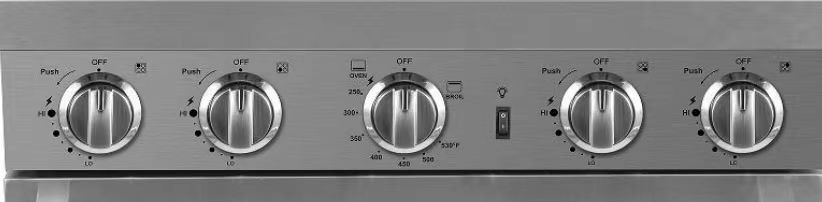
Understanding thermal output metrics ensures you purchase adequate cooking power. You must break down how to read 6 burner gas oven specifications accurately. Burner power is measured in British Thermal Units (BTUs). A standard commercial top burner typically outputs 28,000 to 30,000 BTUs. High-volume models might offer 35,000 BTUs per burner. The main oven cavity usually requires 35,000 to 40,000 BTUs. These numbers dictate how fast water boils and how quickly the oven preheats.
Oven cavity dimensions remain non-negotiable for commercial bakeries. The interior depth and width must comfortably accommodate standard commercial sheet pans. These pans measure 18 inches by 26 inches. A proper bakery oven allows loading pans in multiple orientations. Some cavities fit pans front-to-back. Others fit them side-to-side. Verify these internal dimensions to ensure your existing pan inventory fits easily. A cavity that is too shallow wastes valuable cooking potential.
Build quality and material tolerances dictate equipment longevity. Always prioritize stainless steel for the front, sides, and kick plates. Stainless steel resists corrosion and cleans easily. Heavy-duty cast iron top grates withstand heavy stockpots without warping. Porcelainized oven interiors offer significant cleaning compliance benefits. They prevent baked-on grease buildup. They simplify daily maintenance routines for your kitchen staff.
Commercial Gas Oven Benchmark Guidelines
| Specification Category | Standard Duty Range | Heavy Duty Bakery Range |
|---|---|---|
| Top Burner Output | 25,000 - 28,000 BTUs | 30,000 - 35,000 BTUs |
| Oven Cavity Output | 27,000 - 30,000 BTUs | 35,000 - 40,000 BTUs |
| Grate Material | Light Cast Iron | Heavy-Duty Cast Iron |
| Interior Finish | Standard Enamel | Porcelainized Steel |
Deployment risks often catch new bakery owners completely off guard. Understanding installation realities prevents costly project delays. Upgrading commercial equipment requires strict adherence to local building and safety codes. You must prepare your kitchen infrastructure before the unit arrives.
Selecting the right vendor impacts your long-term operational stability. Assess vendor reliability thoroughly before making a purchase. When choosing a 6 burner gas oven supplier, demand immediate replacement parts availability. Ask about commercial warranty terms explicitly. Look for a minimum of a one-year warranty covering both parts and labor. Ensure the supplier maintains a robust local service network. You cannot afford to wait weeks for a technician during peak holiday baking seasons.
Sometimes, a standard burner configuration falls short of specific menu requirements. Discuss customization scenarios where a standard setup isn't enough. A custom 6 burner gas oven is warranted for specialized tasks. You might swap two open burners for a 12-inch flat cast-iron griddle. This modification proves perfect for searing flatbreads or toasting buns. You might also request specific LP-to-Natural Gas conversion kits depending on your facility's fuel source.
Actionable next steps help you finalize your procurement process efficiently:
A reliable six-burner gas range acts as the central production hub for any growing bakery. It eliminates the daily friction between stovetop preparation and high-capacity baking. Managing multiple heat zones simultaneously protects delicate recipes from stalling. Gas combustion delivers rapid thermal recovery and highly beneficial baking humidity.
Decision-makers should prioritize overall BTU capacity and long-term serviceability over initial price tags. Cheaper units frequently drain budgets through lost production time and frequent repairs. Heavy-gauge materials and accessible internal components ensure your investment survives relentless commercial use.
Consult a commercial kitchen design specialist immediately. Review your current HVAC ventilation limits. Audit your natural gas line capabilities thoroughly. Verify these infrastructure details before you begin requesting equipment quotes. Proper upfront planning guarantees a seamless transition into higher production volumes.
A: Yes. Commercial units often require a 3/4" or 1" gas connection and a specific gas pressure (measured in Water Column inches) that exceeds standard residential setups.
A: It depends on the product. Gas provides faster heat recovery and a naturally moist environment (great for breads and certain pastries), while electric offers drier, highly precise heat (preferred for delicate macarons or soufflés).
A: Most standard commercial 36-inch 6-burner ovens feature a cavity designed to hold at least one full-size (18" x 26") sheet pan per rack, typically coming with two racks but accommodating more depending on the internal height and baking clearances.

