
Please Choose Your Language
Follow
close
Choose Your Site
Global
Social Media


Views: 0 Author: Site Editor Publish Time: 2026-11-13 Origin: Site


Step into any high-volume commercial kitchen during peak service hours. The structural limits of standard four-zone or six-zone ranges become painfully obvious. Tickets stack up relentlessly. Chefs struggle with prep-time bottlenecks. Maintaining consistent heat distribution across fully occupied grates turns into a logistical nightmare. Solving this thermal bottleneck requires expanding the active cooking surface. Upgrading to a commercial-grade appliance fundamentally changes workflow dynamics. This guide evaluates critical purchasing factors based on empirical engineering data. It explains why this heavy-duty upgrade serves as a reliable long-term investment that pays for itself through drastically increased thermal efficiency.
Recent market data reveals a massive shift toward high-capacity, multi-zone cooking equipment. The rapid expansion of ghost kitchens and delivery-first restaurant models drives this demand. Establishments must execute highly diversified menus from a single kitchen line. Maximizing burner density without expanding the physical kitchen footprint is now a top operational priority. A robust 8 burner stainless steel stove fits perfectly into this modern strategy. It offers the precise thermal flexibility required to handle multiple cuisines simultaneously, ensuring that kitchen output scales seamlessly with delivery app order spikes.
Unmatched Capacity: Operating an eight-zone gas range allows culinary professionals to multitask flawlessly. You can boil, simmer, and sear multiple complex dishes simultaneously without workflow interruptions.
Structural Durability: A premium stainless steel chassis provides essential rust resistance, simplified maintenance, and commercial-grade longevity under extreme thermal stress.
High BTU Output: Top equipment features powerful, independently controlled burners engineered for rapid heating and precise temperature recovery.
Top Recommendation: The Komisun WH8S Free Standing Commercial Gas Stove stands out as the premier choice due to its robust build quality and exceptional daily performance.
Installation Planning: High-capacity commercial stoves demand specific gas line sizing, adequate wall clearances, and heavy-duty ventilation systems to meet local safety codes.
Upgrading primary cooking equipment shifts how a kitchen handles high-volume production. The core advantage lies in sheer commercial efficiency. Having eight dedicated heating zones eliminates the need to shuffle pans. Cooks dedicate specific zones to different thermal tasks. Active sautéing takes the front burners. Slow-simmering sauces utilize the back. This direct increase in cooking real estate translates to faster ticket times and higher table turnover rates.
Furthermore, material construction dictates equipment lifespan. Stainless steel remains the strict industry standard. It effectively resists corrosion from acidic foods like tomatoes and citrus. It withstands extreme high-heat environments and prevents bacterial buildup due to its non-porous nature. A sleek metallic finish also elevates the visual professionalism of open-concept kitchens, signaling a clear commitment to culinary excellence.
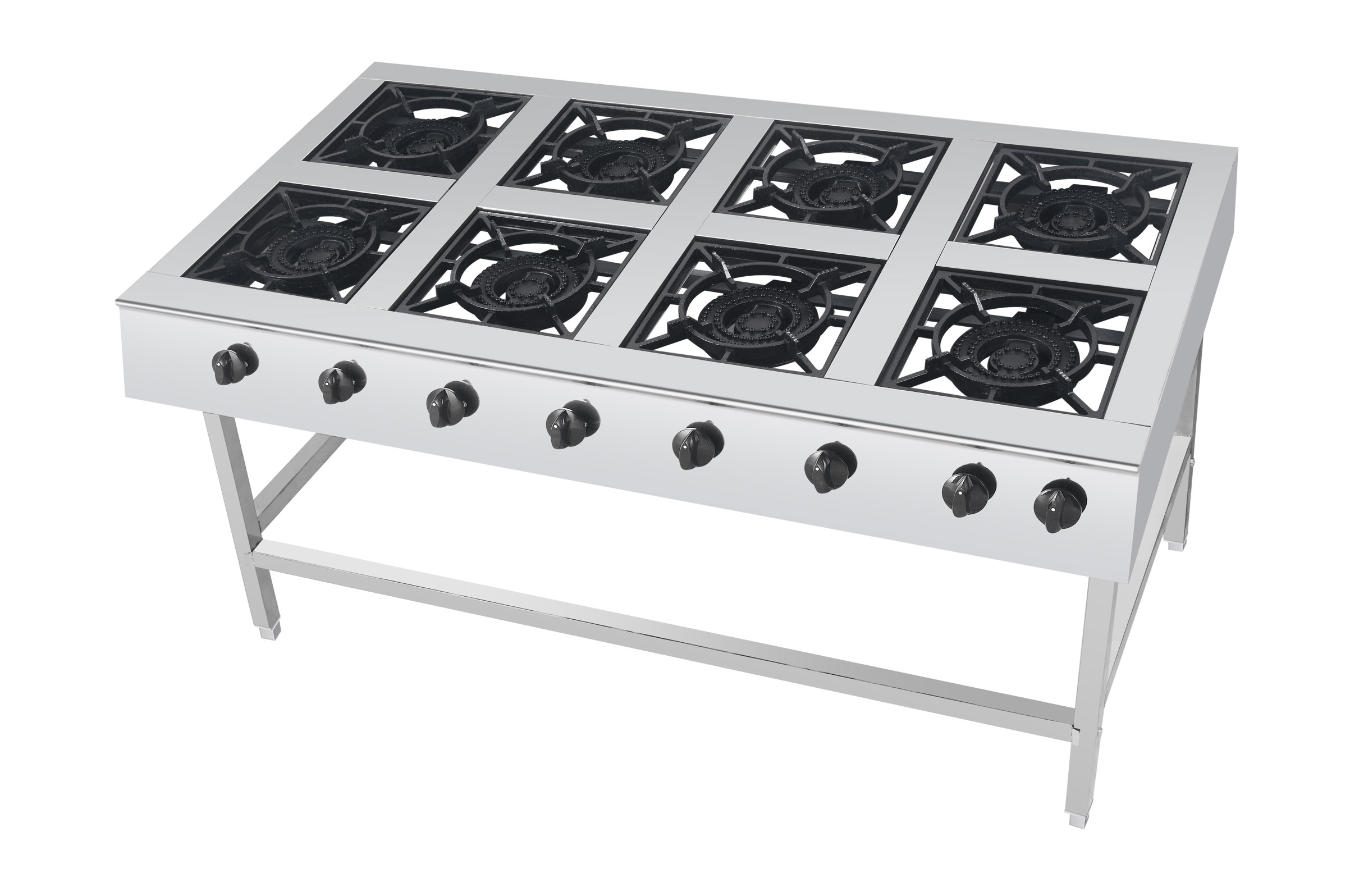
Selecting the right equipment requires evaluating technical specifications. Look past the shiny exterior. Understand how the appliance performs during a grueling twelve-hour shift. Below is a core comparison of what separates standard units from premium commercial workhorses.
Specification | Standard Commercial Range | Premium 8 Burner Range |
|---|---|---|
BTU Output per Burner | 20,000 - 25,000 BTU | 30,000+ BTU for rapid thermal recovery |
Grate Material | Lightweight steel or thin cast iron | Heavy-duty cast iron, warp-resistant |
Chassis Construction | 430 Stainless Steel front, galvanized sides | Full heavy-gauge stainless steel body |
Maintenance Features | Fixed drip trays | Full-width removable slide-out grease pans |
British Thermal Units measure the exact heat output of a burner. In a professional setting, high-BTU burners are absolutely essential. Tasks like wok cooking, rapid boiling of massive stockpots, and heavy-duty searing demand intense, immediate heat. A premium commercial 8 burner stainless steel stove should deliver around 30,000 BTUs per burner. This ensures rapid temperature recovery when cold ingredients hit a hot pan. Without this power, food steams in its own juices instead of developing a proper sear.
Long-term durability depends entirely on chassis rigidity. Buyers must look for a heavy-gauge frame that resists warping under continuous thermal stress. Heavy-duty cast iron grates are vital. They must support the immense weight of 40-quart stockpots without bending. Additionally, reinforced manual control knobs are a necessity. They endure constant, aggressive daily adjustments by busy kitchen staff.
Operational efficiency extends far beyond the actual cooking process. End-of-shift cleaning is a labor-intensive chore. Therefore, removable grease trays and seamless metallic surfaces are necessary features. These full-width trays catch food debris, spills, and grease. Staff simply slide them out and wash them at the sink. This drastically minimizes cleaning times and helps maintain strict hygiene standards.
When evaluating empirical performance, structural durability, and overall operational value, specific models rise above the rest. For business owners seeking a reliable workhorse, the Komisun WH8S free standing commercial 8 burner gas stove stands out as an exceptional engineering achievement.
This unit is meticulously engineered to maximize thermal output while maintaining a manageable footprint. It features eight high-performance burners delivering a massive combined BTU output. All eight cooking zones operate at maximum capacity simultaneously without experiencing frustrating gas pressure drops. The stove is configurable for either Natural Gas or Liquid Propane. Heavy-duty cast iron grates sit securely above the burners. They offer a stable, non-slip surface that allows cooks to slide heavy pans seamlessly from front to back. Each burner is operated by independent mechanical controls, providing the precise reliability needed in environments where digital boards often fail due to extreme heat and moisture.
What makes this unit truly exceptional is its robust freestanding architecture. Kitchen floors are notoriously uneven due to required drainage grading. To combat this, the WH8S features heavy-duty, adjustable stainless steel legs. These are critical for achieving a perfectly level cooking surface, which is an absolute must for even oil distribution in sauté pans. Ultimately, it delivers premium commercial capabilities without compromising on structural integrity.
While our top pick is an exceptional freestanding stovetop, different operational models require different configurations. It is important to consider alternative setups based on specific spatial constraints.
Many establishments require high-capacity baking capabilities alongside stovetop cooking. Models featuring a double oven base allow operators to maximize vertical space efficiency. Chefs can roast meats in the lower compartments while simultaneously utilizing the high-output burners above. In contrast, cleaning beneath these units is slightly more difficult compared to an open-base model.
For smaller diners or food trucks looking to expand capacity without a massive initial capital expenditure, budget constraints are a real concern. Budget-friendly options typically utilize slightly lighter-gauge metals to reduce manufacturing costs. However, they still provide the necessary surface area to drastically improve workflow for startups.
Proper maintenance ensures optimal performance, prevents dangerous fire hazards, and significantly extends the lifespan of your appliance. Neglecting a heavy-duty gas range quickly leads to clogged burner ports and uneven flames.
At the conclusion of each shift, always allow the grates to cool to a safe temperature. Remove the cast iron grates. Kitchen staff should wipe down the metallic body using specialized, non-abrasive commercial degreasers. Strictly avoid using steel wool. Harsh abrasive tools scratch the brushed finish and leave behind microscopic iron particles that inevitably rust.
Once a week, a deeper clean is required to maintain optimal gas flow and a crisp blue flame. Submerge the heavy cast-iron grates in a heavy-duty degreasing solution to break down carbonized food. Carefully inspect the gas ports. Use a stiff wire brush or a specialized port-cleaning tool to clear any blockages caused by boiled-over liquids. A clogged port restricts gas flow, resulting in an inefficient, yellow flame.
Purchasing large commercial equipment is only the first step. Installing it involves strict logistical, infrastructural, and safety considerations.
An eight-burner unit operating at full capacity generates an immense volume of ambient heat, aerosolized grease, and combustion byproducts. Consequently, it strictly requires a commercial-grade Type 1 exhaust hood. The hood must possess a high CFM rating tailored to the total BTU output of the stove. In commercial settings, this ventilation system must integrate with an approved fire suppression system.
Standard residential gas lines cannot supply enough fuel for the massive BTU draw of eight simultaneous commercial burners. A certified plumbing professional must verify and likely upgrade your building's gas line diameter, usually to 3/4 inch or 1-1/4 inch. Installing the correct pressure regulators is mandatory. Inadequate gas pressure results in starving burners and unstable flames.
Commercial stoves intentionally lack heavy thermal insulation to maximize internal space. Because the exterior walls get incredibly hot, they require specific, measured clearances from any combustible walls. Always consult local commercial kitchen fire codes and the local fire marshal prior to installation to ensure full legal compliance.
Choosing between a six-burner and an eight-burner model should be based entirely on hard operational metrics rather than guesswork.
Evaluate your peak service times objectively. The primary metric is active pan capacity. If your kitchen staff regularly juggles more than six active pans simultaneously, upgrading to an eight-burner stove is absolutely essential to prevent costly service delays. Conversely, if your menu relies more heavily on flat-top griddles or deep fryers, a six-burner model might suffice.
While the upfront capital cost of a larger unit is higher, the return on investment is rapidly realized. ROI is calculated by table turnover. If a smaller stove causes a 10-minute delay per table during peak Friday hours, the lost revenue over a single year far exceeds the price difference of the larger equipment. The extra two burners pay for themselves rapidly through increased food production.
Upgrading your kitchen's cooking capacity is a strategic operational choice that directly impacts your bottom line. A premium freestanding 8 burner stainless steel stove provides unmatched thermal power and multitasking real estate. It ensures reliable, consistent performance for busy restaurants, handling high-volume food preparation with absolute ease.
For unmatched durability, raw power, and commercial reliability, making the leap to an eight-burner configuration is the ultimate choice for serious culinary professionals. We highly recommend exploring the Komisun WH8S model today. It will significantly improve your daily operational workflow, reduce ticket times, and alleviate kitchen stress. Equip your kitchen with the right tools and watch your service efficiency soar.
A standard commercial unit typically outputs between 25,000 to 35,000 BTUs per burner. You should look for a stove that can deliver upwards of 200,000 to 280,000 total BTUs. This immense power ensures rapid heating, aggressive searing, and incredibly fast temperature recovery times in a busy kitchen environment.
With rigorous daily cleaning and routine preventive maintenance, a high-quality commercial stainless steel gas stove can easily last 10 to 15 years. The lifespan heavily depends on the quality of the chassis materials, the thickness of the cast iron grates, and how promptly worn components like thermocouples and gas valves are replaced.
Ventilation requirements are calculated based on the total BTU output of the cooking equipment. A general engineering rule of thumb for heavy-duty gas ranges is 100 CFM per linear foot of hood space, or approximately 1 CFM for every 100 BTUs. An 8-burner stove generating 240,000 BTUs will typically require an exhaust hood capable of pulling at least 2,400 CFM, though local fire and health codes will dictate the exact legal requirement.
While technically possible, doing so requires significant structural and infrastructural modifications. Commercial stoves completely lack the thick insulation found in residential models. They require much larger, strict clearances from combustible wooden cabinets to prevent fire hazards. You will also need to install a massive commercial-grade exhaust hood and upgrade your home's gas line to safely meet the high BTU demand.
Not if you maintain it daily. The metallic surface is naturally non-porous and incredibly easy to wipe down with standard commercial degreasers. Models equipped with removable heavy-duty cast iron grates and slide-out grease catch trays make the cleaning process highly efficient, even after a chaotic dinner service.
Yes. Because this massive appliance produces an incredible amount of ambient heat, smoke, and aerosolized grease, a high-CFM commercial exhaust hood is absolutely mandatory. In commercial settings, this hood must also be equipped with an approved, code-compliant fire suppression system to meet strict local municipal safety codes and insurance requirements.

