
Please Choose Your Language
Follow
close
Choose Your Site
Global
Social Media


Views: 0 Author: Site Editor Publish Time: 2026-11-13 Origin: Site


Upgrading kitchen appliances is a serious investment in both daily functionality and home value. As an appliance engineer, I often see homeowners struggle with the most critical decision: selecting the right cooking range. For the vast majority of residential households, a reliable cooking platform provides the foundation for daily life. Are you a dedicated home cook preparing complex dinners? Or perhaps a busy parent trying to get a quick weeknight meal on the table? Navigating the current appliance market requires looking beyond the shiny exterior.
Modern gas ranges have evolved dramatically. They now integrate advanced safety mechanisms and precise thermal controls. Years ago, you only found these features in commercial kitchens. This comprehensive guide breaks down the essential smart features, objective performance metrics, and critical buying factors. By understanding these technical specifications, you can make an informed decision that perfectly supports your culinary workflow.
Before diving into specific components, we need to look at where the gas appliance industry is heading. Recent market data shows a massive shift in consumer preferences toward intelligent kitchen safety. Modern consumers are no longer satisfied with basic manual controls. Driven by stricter residential safety regulations, manufacturers are making sensor-driven technologies the baseline standard rather than a premium upgrade.
Specifically, the demand for integrated safety protocols has surged. We are seeing a rapid phase-out of traditional standing pilot lights in favor of electronic ignition systems. Furthermore, energy efficiency standards are pushing engineers to redesign burner ports. The goal is to optimize the gas-to-heat conversion ratio, ensuring faster boiling times while consuming less fuel. This industry-wide focus on sustainable, safe cooking means today's buyers get significantly more advanced technology for their investment compared to just five years ago.
Optimal Cooking Capacity: A standard four-burner layout provides ample surface area for multitasking without overwhelming standard residential kitchen dimensions.
Material Matters: High-grade stainless steel remains the industry standard for appliance longevity. It offers superior resistance to thermal shock and corrosion.
Smart Safety Features: Essential features now include electronic Auto-Ignition and Flame Failure Devices to actively prevent hazardous gas leaks.
Configuration Options: Consumers must decide between freestanding cookers and built-in gas hobs based on their specific cabinetry layout.
Heat Output: Effective cooking requires variable heat. Look for a stove offering a strategic mix of high-heat wok burners and low-heat auxiliary burners.
When evaluating new kitchen equipment, the primary material construction and the physical dimensions dictate everything. Industry data and consumer usage patterns consistently indicate that a four-burner configuration is the practical sweet spot for residential environments. Imagine juggling a boiling pasta pot, a simmering sauce, and sautéing vegetables all at once. This layout provides the exact surface area needed for seamless multitasking.
From a material science perspective, stainless steel is an alloy containing chromium. This element reacts with oxygen to form a microscopic, self-healing protective layer on the surface of the metal. This unique composition allows a high-quality 4 burner stainless steel stove to withstand daily physical wear, the heavy impact of cast-iron skillets, and extreme heat fluctuations without warping. Unlike enamel finishes that chip under sudden impact and expose the underlying metal to rust, stainless steel maintains its structural integrity over decades of heavy use.
Space optimization is another crucial factor. This specific configuration is engineered to fit effortlessly into standard cabinet cutouts, typically measuring around 50x50cm or 60x60cm. Beyond functional durability, the metallic finish reflects ambient light and matches other contemporary appliances. It offers a professional-grade aesthetic that elevates the overall visual cohesion of the space.
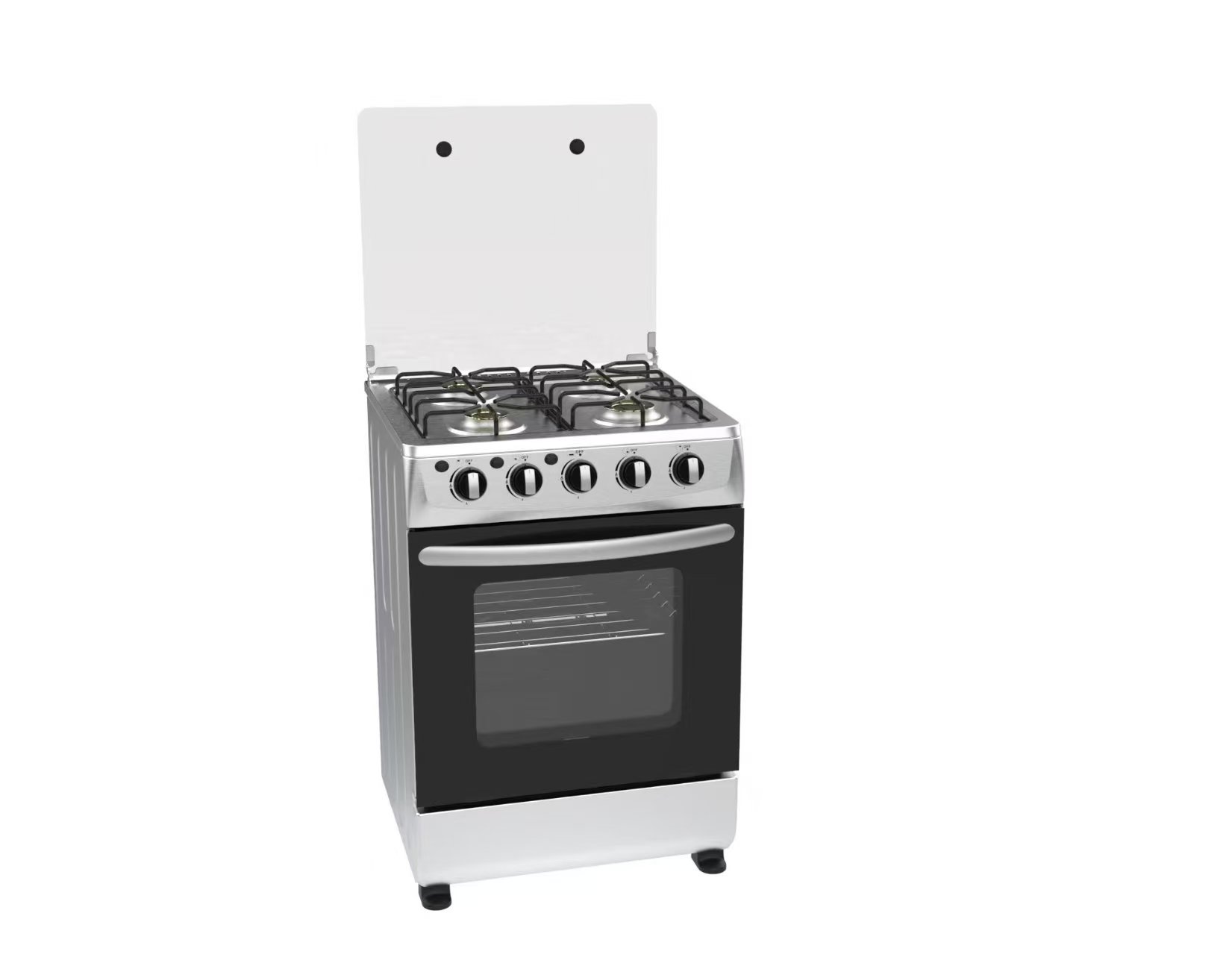
Understanding the structural differences between stove configurations dictates both installation requirements and your future cooking capabilities. Let us break down the exact differences to help you choose the right format.
Feature | Freestanding Cooker with Oven | Built-In Gas Hob |
|---|---|---|
Installation | Simple slide-in placement. Connects directly to the gas line behind the unit. | Requires custom countertop cutting and professional drop-in installation. |
Cooking Versatility | All-in-one solution. Combines stovetop searing with large-batch baking. | Stovetop only. Requires a separately purchased and installed wall oven. |
Space Efficiency | Maximizes vertical space by utilizing the area directly beneath the burners. | Leaves under-counter space free for drawers, but requires wall space elsewhere for an oven. |
Aesthetic | Classic, robust, and professional appearance. | Minimalist, seamless integration with the countertop. |
A freestanding range is a self-contained unit resting directly on the kitchen floor. The primary advantage here is all-in-one convenience. For households that frequently bake, having an integrated oven simplifies meal preparation immensely. If you seek a comprehensive cooking solution, opting for a full stainless steel 4-burner freestanding cooker delivers exceptional versatility.
In contrast, a built-in gas hob is highly favored in bespoke kitchens prioritizing minimalist aesthetics. They pair exceptionally well with separate, ergonomically placed wall ovens. However, they demand precise countertop modifications.
Historically, gas stoves were basic manual appliances requiring external ignition sources. Today, they are engineered with intelligent, sensor-driven features designed to maximize safety and efficiency.
One of the most critical advancements in gas appliance safety is the Flame Failure Device, commonly known as FFD. As an engineer, I consider this non-negotiable. This smart safety mechanism utilizes a thermocouple sensor positioned directly next to the burner flame. The heat from the flame generates a tiny electrical current that holds the main gas valve open. If a sudden draft extinguishes your flame, the thermocouple cools down instantly. Consequently, the electrical current stops, and a spring-loaded valve automatically shuts off the gas supply within seconds. This actively prevents a silent and dangerous gas leak.
In addition to safety, modern units utilize smart electronic ignition systems. When you press and turn the control knob, an electrical circuit generates a continuous spark at the burner head while simultaneously releasing the gas. This ensures a rapid start every time. Precise heat control has also seen major upgrades. Ergonomic knobs now offer linear gas flow, allowing cooks to adjust the flame size with granular accuracy.
A common misconception is that all burners on a standard stove are identical. In reality, a well-designed layout features distinct burner types, each meticulously engineered for specific thermal outputs. Understanding British Thermal Units, or BTUs, is vital for maximizing your appliance's potential.
A standard setup generally includes one rapid wok burner, two semi-rapid burners, and one auxiliary simmer burner. The rapid burner is designed with a wider diameter and dual-flame rings to deliver massive heat quickly. It is your go-to for rapidly boiling large pots of water or searing a thick steak.
Conversely, the auxiliary burner is a small port designed to maintain a very low, consistent flame. Extreme heat is not always better. If a stove lacks a dedicated low-heat burner, typically around 3,000 to 5,000 BTUs, you will inevitably struggle to melt chocolate or simmer delicate cream sauces without scorching the bottom of your cookware.
To ensure your investment meets your daily household requirements, utilize this practical evaluation checklist before finalizing your purchase.
First and foremost, accurate measurement is critical. Measure the width, depth, and height of your current appliance cutout. Pay special attention to the depth, ensuring the new unit will not protrude awkwardly past your cabinet line. Standard freestanding models often come in precise 50x50cm footprints, making them ideal for compact yet highly functional spaces.
If you are leaning toward a 4 burner stainless steel gas free standing cooker stove with oven, evaluating the internal baking capacity and construction is crucial. Look for models featuring a double glass oven door. This engineering detail significantly improves thermal insulation, keeping the kitchen cooler and baking temperatures more consistent. Additionally, an integrated oven grill function expands your cooking repertoire.
Next, inspect the grate materials. Continuous cast-iron grates are the premium standard. Their heavy thermal mass retains heat efficiently, and the edge-to-edge design allows you to smoothly slide heavy pots from one burner to another. Finally, prioritize ease of cleaning. Look for sealed burners that prevent food crumbs and liquid spills from falling into the internal gas plumbing.
Proper maintenance preserves the pristine aesthetic appeal of your appliance and ensures it operates safely for years.
Stainless steel is incredibly durable, but it can scratch if treated improperly. Strictly avoid abrasive sponges, steel wool, or harsh chemical scourers. Instead, establish a daily routine of wiping down the surface with a soft microfiber cloth and a pH-neutral cleaner. Always wipe in the direction of the metal's grain to prevent micro-scratches.
For optimal gas efficiency, your flame should always burn a crisp, steady blue. If you notice flickering yellow flames, the burner ports are likely clogged with carbonized food. Once the appliance is completely cool, remove the burner caps. Soak them in warm, soapy water, and use a stiff non-metallic brush or a simple safety pin to carefully clear out the individual gas ports. Ensure all parts are completely dry before reassembling.
Investing in a high-quality 4 burner stainless steel gas stove brings balance, safety, and elevated performance to any kitchen. By prioritizing intelligent safety features like the Flame Failure Device, understanding your specific burner requirements, and selecting a structural configuration that fits your space, you guarantee culinary efficiency. Take the time to assess your layout today. If you are ready to upgrade your kitchen with professional-grade equipment, explore the Komisun catalog to find the exact configuration that supports your passion for cooking and meets your commercial or residential needs.
Yes, this configuration provides ample surface area to boil, simmer, and sauté simultaneously. It is the standard layout in most residential kitchens and is more than adequate for preparing complex, multi-course family meals without causing workflow bottlenecks.
Standard freestanding units typically feature a footprint of 50x50cm, 60x60cm, or up to 30 inches wide depending on the region. Always measure your specific cabinet cutout width and depth before purchasing to ensure a flush, seamless fit.
You should absolutely avoid abrasive sponges or steel wool. To safely remove stubborn burnt residue, apply a thick paste made of baking soda and warm water to the affected area. Allow it to sit for 20 minutes to soften the carbonized food, then gently wipe it away with a non-scratch microfiber cloth, following the natural grain of the steel.
A Flame Failure Device is a smart, sensor-based safety mechanism utilizing a thermocouple. It constantly monitors the heat of the burner flame. If the flame goes out unexpectedly due to a spill or a sudden wind draft, the sensor cools rapidly, and the device automatically cuts off the internal gas valve to prevent hazardous unburned gas from leaking.
Yes, proper ventilation is highly recommended and often required by local building codes. A range hood that vents to the outside removes combustion byproducts, grease, and cooking odors, maintaining a safe and clean indoor air environment.
Absolutely. Freestanding ranges equipped with a full-sized internal oven are highly capable appliances. Models featuring double glass oven doors and integrated grills are specifically engineered to handle rigorous baking tasks, ranging from daily dinner casseroles to large-scale holiday roasting.
For the vast majority of residential kitchens, sealed burners are highly preferred. A sealed burner features a cap that prevents food crumbs and grease spills from falling beneath the cooktop surface into the internal gas valves. This design makes daily cleanup significantly faster and protects internal components from corrosion.

