
Please Choose Your Language
Follow
close
Choose Your Site
Global
Social Media


Views: 0 Author: Site Editor Publish Time: 2026-02-19 Origin: Site


Professional kitchens are filled with various types of cooking equipment, but one appliance that stands out among chefs is the gas range. A gas range offers unique benefits that make it the preferred choice in kitchens around the world, whether for home chefs or professionals. Gas cooking has been trusted for generations, providing the control, efficiency, and versatility that chefs need in high-demand kitchens.
The growing popularity of gas cooking is not just because of its historical presence, but because of its unmatched functionality. Unlike electric ranges, gas ranges offer several advantages that make them indispensable in the kitchen. In this article, we will explore why professional chefs prefer cooking on a gas range, looking at key aspects such as heat control, cooking consistency, versatility with cookware, and cost-effectiveness. By the end, it will be clear why gas ranges are the top choice for professional kitchens around the world.
For chefs, precision is everything. In a professional kitchen, there’s no room for error when it comes to cooking temperatures. Gas ranges provide instant heat adjustments, allowing chefs to make quick changes to cooking temperatures. This immediate response is crucial for dishes that require precise timing or techniques such as searing meat, caramelizing sugar, or cooking delicate sauces. With gas ranges, chefs can adjust the flame at a moment’s notice without waiting for the appliance to heat up or cool down.
The ability to quickly change the cooking temperature also allows for better control over the dish. For example, when working with proteins, high heat can be used to sear the outside, while a lower flame can be applied to finish cooking the inside, all without waiting for a stove to adjust. Gas ranges make these transitions seamless, ensuring the chef has full control over the cooking process.
One of the biggest advantages of a gas range is the direct and visible flame. Unlike electric ranges, which use coils or ceramic surfaces that heat up slowly, gas ranges offer an open flame that provides immediate heat. This allows chefs to visually assess the intensity of the flame and adjust it according to the recipe. With gas ranges, chefs can achieve the perfect level of heat for different cooking methods.
For example, when sautéing, a professional chef can use a high flame to cook vegetables or meats quickly, locking in flavors and textures. Conversely, simmering sauces or soups requires a lower flame to gently cook the ingredients without burning them. Gas ranges allow for this range of flame control, enabling chefs to execute complex dishes with ease.
In any professional kitchen, consistency is crucial. A dish that is cooked unevenly, with parts overcooked and others undercooked, can ruin the whole meal. Gas ranges are renowned for their ability to distribute heat evenly. The open flame ensures that heat is applied uniformly across the base of the pan, resulting in even cooking.
In contrast, electric ranges may have hot spots, especially if the coil or heating element doesn’t make full contact with the bottom of the cookware. This can lead to uneven cooking and the need for constant attention and adjustment. Gas ranges, on the other hand, provide a consistent, reliable source of heat, making it easier for chefs to produce dishes with precise results every time.
In high-demand kitchens, chefs often need to cook large quantities of food in a short amount of time, with each dish requiring the same level of quality. Gas ranges excel in such environments, where maintaining consistency over long hours of operation is crucial. Whether preparing dozens of portions of a single dish or multiple dishes simultaneously, chefs rely on the consistency that gas burners provide.
With electric ranges, fluctuations in heat can occur, particularly when the heating element cycles on and off to maintain temperature. This may result in slight inconsistencies in the cooking process. With gas ranges, the flame remains constant, ensuring that every dish receives the same treatment and is cooked to perfection.
Feature | Gas Range | Electric Range |
Heat Distribution | Even heat across burner surface | Can have hot spots |
Temperature Adjustment | Instant flame adjustments | Takes time to heat and cool |
Performance Consistency | Highly consistent over time | May fluctuate depending on power supply |
Ideal Cooking Techniques | Searing, stir-frying, simmering | Baking, boiling |
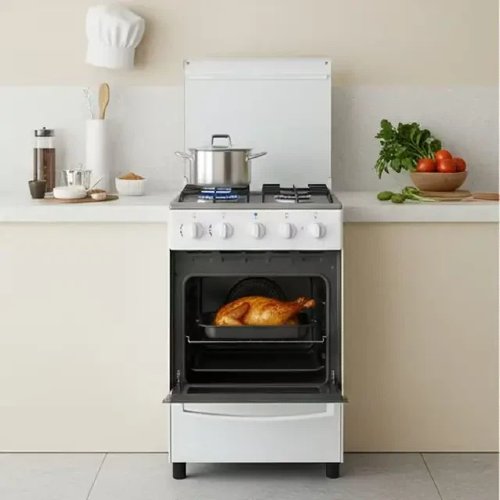
One of the biggest advantages of a gas range is its versatility in accommodating different types of cookware. Gas burners work well with a wide variety of pots and pans, including those made from cast iron, copper, and stainless steel. These materials are commonly used in professional kitchens because of their excellent heat conduction, and gas ranges are perfect for cookware that requires direct heat contact.
On the other hand, electric ranges may not offer the same level of flexibility. Some electric stovetops, especially older models, have coils that are incompatible with certain types of cookware, such as large, flat-bottomed pans or specialty pots. Gas ranges allow chefs to use their cookware of choice, without worrying about compatibility.
Professional chefs often use a wide range of cooking techniques, such as flambéing, roasting, and broiling, all of which are more effectively executed on a gas range. The immediate heat control and direct flame allow for precision when performing such techniques, which is difficult to achieve with an electric range. Gas ranges support the following techniques:
Flambéing: A high flame is ideal for this technique, which is difficult to achieve on an electric stove.
Grilling: The intense direct heat from a gas flame creates the searing effect needed for grilling.
Braising and Roasting: The oven on a gas range provides consistent heat for slow cooking and browning.
Gas ranges are built to withstand the rigors of a busy kitchen. They are designed for high-performance cooking and are capable of handling long hours of use without significant wear. Professional chefs trust gas ranges because of their durability, ensuring that they can rely on them to perform consistently, day in and day out.
The components of a gas range, such as the burners, ignition system, and oven, are designed to last longer than their electric counterparts. With proper care and maintenance, a gas range can easily serve a professional kitchen for many years.
Another advantage of a gas range is its ease of maintenance. Gas ranges require less frequent and complicated repairs compared to electric ranges. For example, if a burner is malfunctioning, it is often as simple as cleaning the burner head or replacing the igniter. In contrast, electric ranges may require more expensive and complicated repairs related to their heating elements or control systems.
For chefs, quick repairs are vital to avoid downtime in the kitchen. Gas ranges make it easy to troubleshoot and repair minor issues, ensuring that the kitchen continues to run smoothly.
When it comes to operating costs, gas ranges are generally more cost-effective than electric ranges, especially in professional kitchens. Gas is often less expensive than electricity, and gas ranges use it more efficiently. This means that chefs can cook larger quantities of food without significantly increasing their energy bills.
Additionally, gas ranges heat up faster and cool down more quickly, which results in reduced energy consumption during cooking. For high-volume kitchens, where energy usage is a significant concern, gas ranges provide a more affordable option in the long run.
For professional kitchens, gas ranges are an affordable investment. They provide chefs with the flexibility and reliability they need, all while keeping operational costs low. The combination of initial affordability and long-term value makes gas ranges a practical choice for restaurants, catering services, and other food establishments.
In conclusion, gas ranges are the preferred choice for professional chefs for several compelling reasons. They provide precise heat control, ensuring perfect cooking every time, and offer even heat distribution, which is essential for consistent results. Gas ranges also offer versatility, allowing chefs to use a wide variety of cookware, from cast iron to stainless steel. Their durability, ease of maintenance, and cost-effectiveness make them an indispensable tool in any professional kitchen.
At Foshan Komisun Electric Appliance Co., Ltd., we understand the importance of having reliable and high-performance equipment in the kitchen. Our range of gas ranges is designed to meet the needs of both professional chefs and home cooks, offering exceptional quality and value. Whether you’re running a busy restaurant or cooking at home, our products are tailored to elevate your cooking experience. If you’re interested in learning more or would like expert guidance, feel free to get in touch with us. We're here to help you choose the perfect gas range for your needs.
Why do professional chefs prefer gas over electric ranges?
Gas ranges offer instant heat control, even cooking, and better versatility with cookware, which are essential for professional cooking.
Are gas ranges more energy-efficient than electric ranges?
Yes, gas ranges typically use less energy and are cheaper to operate, making them ideal for high-demand professional kitchens.
Can I use any type of cookware on a gas range?
Gas ranges are highly versatile and compatible with a wide range of cookware, including cast iron, copper, and stainless steel.
How easy is it to maintain a gas range?
Gas ranges are easy to clean and maintain. Regular cleaning of burners and occasional part replacements ensure long-lasting performance.
Do gas ranges last longer than electric ranges?
Gas ranges tend to last longer due to their durable components and ease of repair. They are designed for heavy-duty use and can withstand the demands of professional kitchens.

