
Please Choose Your Language
Follow
close
Choose Your Site
Global
Social Media


Views: 0 Author: Site Editor Publish Time: 2026-02-10 Origin: Site


When it comes to outfitting your kitchen, choosing the right gas range is one of the most important decisions you will make. A gas range can significantly impact your cooking experience, energy consumption, and overall kitchen aesthetics. Homeowners often find themselves overwhelmed with the various options available, so understanding the key features to look for can make the decision-making process much easier. In this article, we will break down the Top 10 Gas Range Features Homeowners Care About Most, highlighting the must-have features that can elevate your cooking experience.
One of the most critical factors when selecting a gas range is the burner efficiency and power output. The burners are the heart of any gas range, and their performance directly influences how well you can prepare a wide variety of dishes.
BTU (British Thermal Unit) measures the power of a gas burner. A higher BTU means more heat, which is ideal for high-heat cooking such as stir-frying or boiling water quickly. Standard burners typically range between 7,000 to 15,000 BTUs. However, high-performance burners can reach up to 20,000 BTUs or more. A gas range with adjustable BTU levels can offer more control over your cooking and better meet your specific needs.
Low Power (7,000-9,000 BTUs): Ideal for simmering, melting, or cooking delicate dishes such as sauces, soups, or rice.
Medium Power (10,000-14,000 BTUs): Suitable for most everyday cooking tasks such as boiling, grilling, and frying.
High Power (15,000-20,000+ BTUs): Best for fast cooking, stir-frying, or boiling large pots of water quickly. These burners can generate intense heat, which is perfect for techniques that require rapid temperature changes.
The oven is just as important as the burners, especially when it comes to preparing larger meals or baking. Oven size directly correlates with how many dishes you can prepare at once, and it can affect the overall cooking efficiency for families or individuals who often cook multiple meals simultaneously.
A standard gas range oven typically ranges from 4.5 to 6.0 cubic feet. For smaller households, a 4.5 cubic feet oven might suffice. However, larger families or those who bake often may benefit from a larger oven with more capacity. A larger oven allows you to cook larger cuts of meat or multiple trays of cookies at once, which can be especially useful during holiday seasons or special events.
Comparison of Gas Range Oven Sizes
Oven Size (Cubic Feet) | Ideal for | Common Uses |
4.5 - 5.0 | Small to medium families | Everyday meals, small batches of baking |
5.0 - 5.5 | Medium to large families | Baking, roasting, and larger meals |
5.5 - 6.0 | Larger families or frequent entertainers | Large roasts, multiple dishes, large baking projects |
The increased capacity not only provides more space for cooking but also reduces the need for multiple cooking sessions when preparing large meals, enhancing overall convenience.
A convection oven is a feature that homeowners often look for in a gas range, especially if they enjoy baking or roasting.
Convection ovens use a fan and exhaust system to circulate hot air throughout the oven, which allows food to cook more evenly and quickly. This feature is particularly useful when roasting meats or baking items like cookies, where even heat distribution is essential. The convection feature reduces the risk of uneven cooking and hot spots, ensuring that every part of your dish is cooked to perfection.
Faster Cooking Times: The circulating hot air speeds up cooking, saving time for busy cooks.
Even Cooking: No need to rotate or shuffle dishes mid-cooking, as convection ensures an even temperature, which results in perfectly cooked food every time. It also eliminates the need for additional monitoring, which is particularly convenient for home chefs who multitask in the kitchen.
Cleaning an oven after cooking can be a daunting task, especially after cooking greasy meals or large roasts. With self-cleaning ovens, homeowners can save a significant amount of time and effort spent on scrubbing the oven manually.
Self-cleaning ovens use high temperatures to burn off food residues inside the oven. This "pyrolytic" cleaning process converts grease, fats, and spills into ash, which can easily be wiped away once the oven cools down. This function eliminates the need for harsh chemicals and abrasive scrubbing, which can be harmful to the appliance and require significant effort.
Time-saving: No more scrubbing grease and grime. Once the cleaning cycle is complete, simply wipe the oven with a damp cloth to remove the ash.
Convenience: Ideal for homeowners who cook frequently and want to save on cleaning time. It’s especially beneficial for those who enjoy baking or roasting, as it helps maintain a cleaner oven without the hassle of regular deep cleaning.
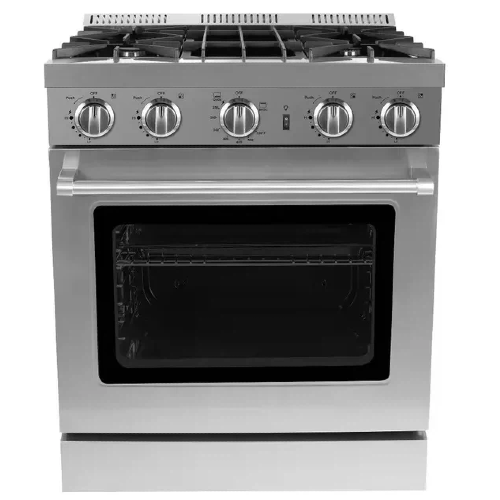
When selecting a gas range, safety is always a top priority. Gas ranges come with several safety features designed to reduce risks and make cooking a more secure experience.
Electronic Ignition: Modern gas ranges use electronic ignition to light the burners, eliminating the need for a pilot light. This not only saves gas but also ensures safer operation by reducing the risk of gas leaks or unlit burners.
Flame Failure Devices: These devices detect if the burner goes out unexpectedly and automatically shut off the gas supply to prevent dangerous gas leaks. This safety feature provides peace of mind, especially in homes with children or pets.
For families with young children, many gas ranges offer a child lock feature to prevent accidental burner or oven operation. The control panel can be locked to avoid tampering, reducing the risk of burns or unintentional activation of cooking modes.
A gas range should be easy to clean, both on the burners and in the oven. Spills, grease, and food residue can build up over time, making cleaning a necessary but time-consuming task.
Most modern gas ranges come with a stainless steel exterior, which is not only durable but also easy to clean. Additionally, enamel-coated burners and oven interiors are common because they help prevent grease buildup and are easier to wipe down. Stainless steel is also resistant to stains and fingerprints, maintaining its sleek appearance with minimal effort.
Cast Iron Grates: Highly durable and provide excellent heat retention. However, they require periodic seasoning to prevent rust and maintain optimal performance.
Porcelain-Coated Grates: These are easier to clean and more resistant to rust compared to cast iron, though they may not offer the same heat retention qualities.
In today’s digital age, homeowners are increasingly interested in gas ranges with smart technology that allows them to control their cooking remotely.
Wi-Fi Connectivity: Many newer models offer Wi-Fi capabilities, allowing homeowners to control the oven from their smartphones. This feature is ideal for those who like to start preheating their oven on their way home or adjust the cooking settings remotely.
Voice Control Integration: Some gas ranges can integrate with smart assistants like Amazon Alexa or Google Assistant, enabling hands-free operation for a truly modern and convenient cooking experience.
The material of the burners and grates plays a significant role in how a gas range performs and affects cooking efficiency.
Cast Iron: Known for durability and even heat distribution. Cast iron is excellent for maintaining heat, but it can be heavy and requires more care to avoid rust.
Stainless Steel: Lighter and more resistant to corrosion, though it may not retain heat as well as cast iron.
Ceramic: Some gas ranges use ceramic grates, which are lightweight and easy to clean, but they tend to be more fragile compared to cast iron.
Your gas range should not only be functional but should also complement your kitchen's design.
Gas ranges come in a variety of styles, from sleek modern looks to classic retro designs. Consider the colors and finishes that will match your cabinets, countertops, and other kitchen appliances. An aesthetically pleasing gas range can elevate the overall look of your kitchen and create a cohesive design.
Stainless Steel: Timeless and modern, stainless steel is a popular choice that suits most kitchens, providing a professional and sleek look.
Custom Colors: Some brands offer custom color options to match your kitchen’s aesthetic. Whether you prefer bold colors or subtle hues, you can find a range that complements your kitchen style.
Lastly, homeowners need to consider their budget and the warranty provided by the manufacturer. Price plays a crucial role in the decision-making process, as it determines the range of features you can expect.
Gas ranges vary in price, depending on the brand, features, and size. On average, expect to pay anywhere between $500 to $3,000 for a high-quality gas range. More expensive models may offer advanced features like convection cooking, smart technology, and higher BTU burners.
A good warranty can offer peace of mind, especially for high-ticket items like a gas range. Most gas ranges come with a standard one-year warranty, but extended warranties may be available for added protection. Additionally, customer support from the manufacturer is essential in case any issues arise with the range.
Choosing the right gas range is an important investment for both your home and cooking experience. By understanding key features such as burner efficiency, oven capacity, safety functions, and smart technology, homeowners can make well-informed decisions that cater to their specific needs. At Foshan Komisun Electric Appliance Co., Ltd., we specialize in providing high-quality gas ranges designed to enhance your kitchen experience. With a wide range of models equipped with advanced features, including efficient burners, spacious ovens, and modern safety technologies, our products are tailored to meet diverse cooking preferences. Whether you’re a professional chef or a home cook, our gas ranges are built for durability, efficiency, and convenience. We invite you to explore our offerings and get in touch with us to find the perfect gas range for your kitchen. Our team is ready to assist you in selecting the ideal model and answering any questions you may have. Let us help you elevate your cooking with the perfect gas range.
The best gas range for a family kitchen should have a balance of powerful burners (around 15,000-20,000 BTUs), a convection oven feature, and an oven large enough to cook multiple dishes at once. A self-cleaning oven and easy-to-clean surfaces are also key.
Look for the convection symbol on the control panel or in the product specifications. A convection oven will also have a fan that circulates hot air for even cooking.
Self-cleaning gas ranges save time and effort by eliminating the need to scrub the oven manually. The pyrolytic cleaning function burns food residue into ash, which can easily be wiped away.
It’s recommended to have a professional install your gas range, as handling gas lines requires expertise to ensure safety.
Gas ranges provide instant heat and precise temperature control, ideal for high-heat cooking. Electric ranges heat up more evenly but can take longer to adjust temperature, making them better for baking and slow cooking.

